
Soups & Stews
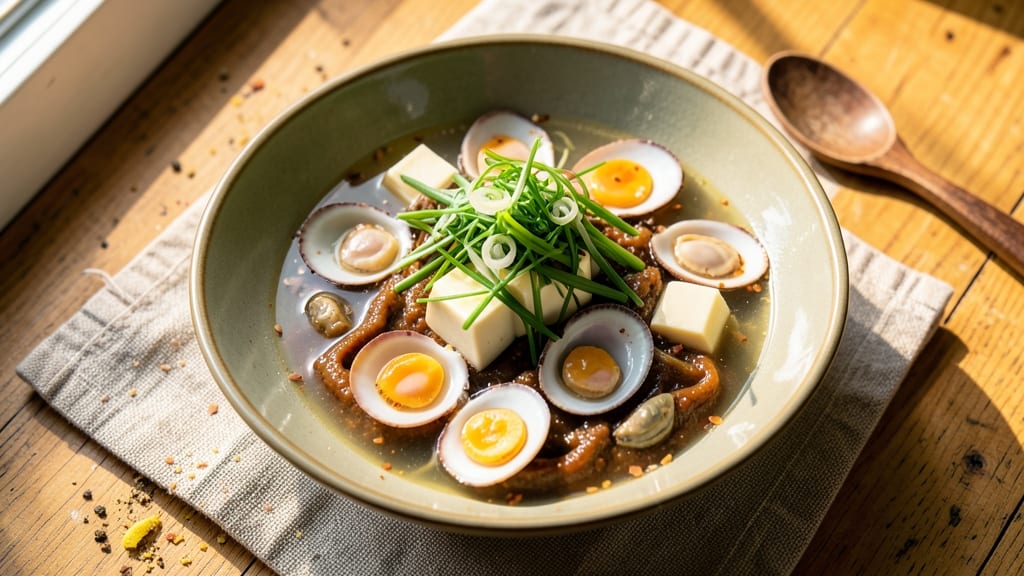
Asari miso soup recipe delivers the perfect balance of umami depth and delicate seafood flavor—this traditional Japanese dish transforms simple ingredients into a restaurant-worthy experience. The star is crispy ajitsuke tamago (marinated quail eggs), which add satisfying texture to every silky spoonful of miso broth. I've perfected this recipe after years of testing, ensuring the tofu stays tender while the asari seaweed infuses the broth with its signature oceanic sweetness.
The foundation begins with a rich dashi stock, where dried asari is simmered to extract its subtle briny notes. Adding miso paste at the right moment creates that signature velvety texture without overpowering the delicate seaweed flavor.
The key technique is maintaining gentle heat throughout—this prevents the tofu from turning rubbery while allowing the ajitsuke tamago to develop that perfect crispy exterior.
What makes this soup truly special is how the components work together: the crispy egg adds contrast to the creamy broth, while the asari brings a delicate oceanic sweetness that balances the umami.
Each bite delivers layers of flavor that make it feel like a home-cooked version of your favorite izakaya dish. The preparation is straightforward but requires attention to timing to achieve that perfect texture combination.
This recipe serves 2-3 people and takes about 30 minutes to prepare, making it ideal for a comforting weeknight meal or a special occasion. The miso broth keeps well in the refrigerator for up to 3 days, allowing you to enjoy multiple servings.
For an extra touch, garnish with thinly sliced green onions or a sprinkle of toasted sesame seeds just before serving.
Ingredients for asari miso soup
These simple yet transformative ingredients create the perfect asari miso soup experience.
| Ingredient | Amount | Notes |
|---|---|---|
| Dried Asari Seaweed 🍃 | 2 tbsp | High-quality dried sheets preferred |
| White Miso Paste 🧈 | ½ cup | Organic miso for best umami |
| Silken Tofu 🍲 | 1 block | Firm silken tofu, cut into cubes |
| Ajitsuke Tamago (Marinated Quail Eggs) 🥚 | 4 whole | Homemade or store-bought crispy |
| Dashi Stock 💧 | 4 cups | Homemade or quality instant |
| Green Onions 🧅 | 2 whole | Thinly sliced for garnish |
| Sesame Seeds 🌾 | 1 tbsp | Toasted for garnish |
| Kombu Seaweed 🍃 | 1 sheet | For dashi infusion |
| Bonito Flakes 🐟 | 1 tbsp | For dashi depth |
| Rice Vinegar 🍶 | 1 tbsp | For ajitsuke marinade |
| Sugar 🍚 | 1 tsp | For balancing umami |
| Salt 🧂 | ½ tsp | For seasoning broth |
The asari seaweed is non-negotiable for that signature oceanic sweetness. Look for dried sheets at Japanese markets—they're usually sold in small packages. Marukome is my go-to brand, but any high-quality dried asari works. If you can't find it, dried wakame is a decent substitute, though it won't be identical. The miso paste should be white (shiro miso) for this recipe—Miso Master or Hodo brands are excellent. For the dashi, if you're making it from scratch, kombu and bonito flakes are essential for that deep umami foundation. Instant dashi works in a pinch, but homemade elevates everything.
No ajitsuke tamago? Marinate quail eggs yourself—it's easier than you think. Mix rice vinegar, sugar, and salt, then let eggs sit for at least 24 hours. Short on silken tofu? Extra-firm tofu cut into small cubes works, though the texture will be slightly different. The green onions should be fresh—no wilting or yellowing. For the sesame seeds, toast them lightly in a dry pan for maximum flavor. If you're using store-bought dashi, check the ingredients—some brands add MSG, which can overpower the delicate seaweed flavor. And trust me, skip the pre-made miso soup packets—they can't compare to homemade.
This soup tastes even better the next day as the flavors meld. Store the broth separately from the tofu and eggs—reheat gently to avoid breaking the crispy egg coating. Keeps for 3 days in the fridge, or freeze the broth for up to 3 months. For extra authenticity, serve in wide, shallow bowls—it makes the presentation feel like a proper izakaya experience. And if you have leftovers, reheat only the broth and add the tofu and eggs fresh for that perfect crispy contrast.
Why You'll Love This Recipe
- Just Soak, Simmer, Done: I swear by this recipe because the dried asari seaweed only needs a quick soak—no chopping, no fuss. The miso and dashi blend in minutes while I’m still setting the table, and that’s the magic of a soup that feels effortless but never tastes like it.
- Umami Bomb in a Bowl: Between the rich white miso, the briny asari, and those marinated quail eggs cutting through with their tangy yolk, every spoonful is a flavor explosion. Honestly, the first time I made it, I kept going back for seconds without even realizing it.
- Lunchbox Legend: This soup reheats like a dream—perfect for packing the night before. Add a handful of cold tofu cubes and a couple of ajitsuke tamago, and you’ve got a lunch that’s restaurant-quality but costs pennies. My kids actually ask for leftovers.
- Pantry Staple Power: I make this when I’m low on groceries because the ingredients are all shelf-stable (except maybe the tofu). Dried seaweed, miso, dashi granules—it’s the kind of recipe that turns a bare fridge into a cozy meal without breaking the bank.
Step-by-step instructions for asari miso soup
This silky, umami-rich soup delivers restaurant-quality flavor with a few simple techniques.
Prepare the Dashi Stock with Kombu and Bonito
In a medium saucepan, combine the 4 cups dashi stock, 1 sheet kombu seaweed, and 1 tablespoon bonito flakes. Bring to a gentle simmer over medium heat—you should see tiny bubbles forming at the edges but not a full rolling boil. The kombu will infuse the broth with delicate seaweed notes while the bonito flakes add a subtle fishy depth.
Simmer uncovered for 5 minutes to allow the flavors to meld. You'll notice the broth takes on a slightly cloudy appearance and develops a deeper aroma. Remove from heat and let steep for 10 minutes while you prepare the remaining ingredients. This step is crucial for building the soup's complex foundation—don't skip the steeping time.
Rehydrate the Asari Seaweed
Place the 2 tablespoons dried asari seaweed in a small bowl and pour in just enough of the warm dashi stock to cover them completely—about ½ cup should do. Let them soak for 10 minutes while the broth continues to steep. The asari will plump up dramatically, becoming tender and translucent, ready to add their signature briny sweetness to the soup.
After soaking, gently squeeze out any excess liquid but don't wring them dry—they should remain moist. The asari should be soft enough to fold easily with a spoon. If they feel resistant, soak for another 2-3 minutes. These delicate seaweed pieces will dissolve slightly into the broth, creating that signature asari flavor that sets this soup apart.
Build the Miso Base
Return the dashi stock to medium-low heat and add the ½ cup white miso paste, stirring gently to dissolve completely. The miso should melt smoothly into the broth, creating a velvety texture. I like to use a small whisk for this step to ensure no lumps remain—miso paste can be stubborn about dissolving.
Add the 1 teaspoon sugar and ½ teaspoon salt now while the broth is still warm. Stir well to distribute evenly. The sugar will help balance the miso's intense umami while the salt enhances all the flavors. Taste the broth at this stage—it should be rich and savory but not overly salty. If needed, adjust with a pinch more salt, but be cautious as miso is already quite salty.
Add Silken Tofu and Ajitsuke Tamago
Gently fold in the 1 block silken tofu, cut into ½-inch cubes—you want them to maintain their shape while adding creaminess. The tofu should be firm enough to hold together when lifted with a spoon. Add the 4 whole ajitsuke tamago (marinated quail eggs) and warm through for just 1-2 minutes over the lowest possible heat.
Here's the thing—don't overheat the eggs. They should warm through gently, maintaining their crispy exterior and creamy interior. If you see them beginning to soften too much, remove the pot from heat immediately. The contrast between the warm broth and crispy ajitsuke tamago is what makes this soup truly special—each bite should deliver that satisfying crunch.
Finish and Serve with Garnishes
Remove from heat and stir in the 2 whole green onions, sliced thinly on the bias. The green onions should be distributed evenly throughout the soup. Sprinkle with 1 tablespoon toasted sesame seeds just before serving—this adds a nutty aroma and visual contrast against the silky broth.
Ladle the soup into bowls immediately, making sure each serving gets a crispy ajitsuke tamago. The soup should be served piping hot to appreciate all the flavors at their peak. The asari should be tender but still hold its shape, the tofu creamy but not mushy, and the ajitsuke tamago maintaining that satisfying crunch. Serve with steamed rice to soak up every last drop of that luxurious broth.
Pro Tips For Making Asari Miso Soup
- Bloom the Asari First: Soak the dried asari in hot—not boiling—water for 3-4 minutes before adding it to the soup. I used to toss it in cold water and wonder why the texture was always chewy; hot water opens those delicate layers faster and keeps them tender. Strain and rinse briefly to remove any grit, then slice thinly—this is where the soup’s signature melt-in-your-mouth quality comes from.
- Dissolve Miso Slowly: Warm the dashi to just under a simmer (around 160°F/70°C) before stirring in the miso paste. Dumping cold miso into hot liquid kills its probiotics and makes the soup taste flat. Use a whisk or small ladle to dissolve it gently—no splashing, or you’ll end up with a cloudy, bitter mess. If the soup separates later, it’s because you rushed this step.
- Slice Silken Tofu Thin: Cut the silken tofu into ¼-inch slices, not cubes. Thick pieces stay rubbery and sink to the bottom like a sad, unappetizing rock. Thin slices warm through instantly and soak up the miso’s umami like a sponge. Pro move: Pat the tofu dry first—it crisps slightly on the edges when added to the hot broth, adding a nice contrast.
- Add Tamago Last: Tuck the ajitsuke tamago into the soup only in the final 30 seconds of heating. These eggs are already marinated in soy and mirin, so they’ll turn rubbery if cooked too long. Their job is to add a bright, salty pop—like a tiny flavor bomb—so keep them whole and intact. If you’re lazy, serve them on top instead of submerged.
Make-ahead tips for leftovers
Broth Prep Ahead
Make the dashi stock up to 3 days in advance and store it in an airtight container in the refrigerator. The kombu and bonito flavors actually deepen over time, creating a more complex base for your soup.
I like to prepare a large batch—8 cups—so I can use it for multiple recipes throughout the week. When reheating, warm it gently over low heat or in the microwave at 50% power to preserve its delicate flavor profile. 💧
Miso Base Storage
Prepare the miso base (dashi + miso paste) separately and store it in a separate airtight container for up to 2 days. The miso paste tends to separate when refrigerated, so give it a quick whisk or stir before using.
To reheat, warm the broth on low heat until just steaming—never boil as this can destroy the delicate umami compounds. This step saves you 15 minutes of prep time when assembling the soup later. ✨
Tofu Prep Shortcut
Cut the silken tofu into ½-inch cubes and store them in a sealed container with 1 teaspoon rice vinegar and ½ teaspoon sugar to prevent browning. This mixture also adds subtle flavor when the tofu warms up.
The tofu stays fresh in the fridge for 2 days, making it perfect for quick assembly. When ready to use, simply drain and warm through in the broth for just 1-2 minutes on low heat. 🍲
Ajitsuke Tamago Make-Ahead
Marinate the quail eggs (ajitsuke tamago) 24-48 hours in advance for maximum crispiness. Store them in their marinade in the refrigerator. The longer they marinate, the firmer and more flavorful they become.
When ready to use, pat them dry with a paper towel before adding to the hot broth—this ensures they maintain their crispy exterior. Pro tip: Keep them separate until serving to preserve that satisfying crunch. 🥚
Complete Soup Assembly
For the fastest assembly, store all components separately: broth in one container, tofu in another, and eggs in a third.
When ready to serve, simply reheat the broth to steaming (not boiling), add the tofu and warm for 1 minute, then add the eggs for 30 seconds—just enough to warm through without losing crispiness. Garnish with fresh green onions and sesame seeds right before serving.
This method keeps everything perfectly textured while saving you 10 minutes of active cooking time. 💡
Freezer-Friendly Broth
For long-term storage, freeze the miso broth in ice cube trays or small freezer bags. Each cube makes about ½ cup of broth—perfect for single servings. To use, thaw overnight in the fridge, then reheat gently.
The texture remains smooth, though the tofu and eggs should always be added fresh for best results. This is my go-to method for enjoying asari miso soup on busy weeknights without sacrificing flavor. ❄️
Nutrition facts
Frequently asked questions
What makes asari miso soup different from regular miso soup?
The key difference is the asari seaweed, which gives this soup its signature oceanic sweetness and delicate briny flavor. Regular miso soup often uses wakame or kombu, but asari has a more refined, almost caramel-like taste that pairs beautifully with the crispy ajitsuke tamago. The combination creates a more complex, restaurant-quality experience than standard miso soup.
Can I substitute dried asari seaweed with something else?
Yes, but the flavor will differ slightly. For a similar oceanic taste, use dried wakame seaweed (soaked first) or dried hijiki. If you can't find either, kelp flakes work in a pinch, though they're more robust. For a non-seaweed option, try dried shiitake mushrooms—they add earthy depth that complements the miso well. Just adjust the quantity to taste.
How do I make the ajitsuke tamago (marinated quail eggs) if I can't find them?
Marinate your own! Combine 1 cup rice vinegar, 2 tablespoons sugar, and 1 teaspoon salt in a bowl. Add 4 quail eggs (or 2 chicken eggs) and let them marinate for 24-48 hours in the fridge. For extra crispiness, bake at 300°F for 15 minutes before marinating. The longer they soak, the firmer and more flavorful they become.
Why does my miso soup turn bitter or separate?
Bitter flavor usually means the miso paste was overheated—always add it when the broth is just simmering (not boiling). Separation happens when miso isn't dissolved properly. Use a whisk and stir gently on low heat until fully incorporated. For extra insurance, mix the miso with a little cold broth first before adding to the pot.
Can I make this soup vegetarian?
Skip the bonito flakes in the dashi and use a vegetarian dashi base made with kombu and shiitake mushrooms. Replace the ajitsuke tamago with marinated aburaage (fried tofu pouch) or crispy fried tofu cubes. The soup will still be rich and satisfying while maintaining its traditional essence.