
Soups & Stews
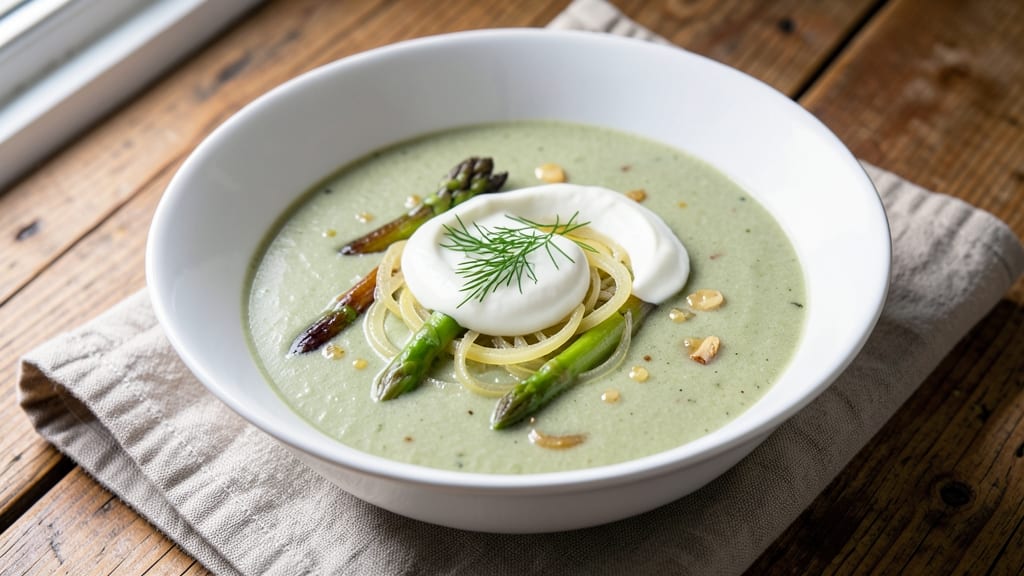
This low-fat asparagus soup delivers all the comforting richness of classic versions without the guilt—creamy texture, vibrant flavor, and a satisfying herb crunch. 💛 The secret lies in using low-fat broth and pureeing just the stems, reserving the spears for a beautiful garnish that adds freshness and visual appeal.
I developed this recipe after realizing most light soups sacrifice depth of flavor for calories, and this version proves you can have both.
The foundation starts with a flavorful base of sautéed onions, garlic, and shallots, which build a savory backbone before the asparagus stems take center stage. By blending only the stems (not the spears), you maintain the soup's natural freshness while achieving that signature velvety consistency.
The low-fat techniques—like skimming excess foam and using Greek yogurt instead of cream—ensure every spoonful stays light yet indulgent.
What makes this soup truly special is the herb crunch topping, where finely chopped parsley, chives, and a touch of lemon zest transform a simple bowl into something restaurant-worthy. The garnish not only adds texture but also brightens each bite with a burst of freshness.
This recipe serves as a perfect spring or summer starter, equally at home as an appetizer or light main course.
Ready in under 30 minutes, this soup is ideal for meal prep—it reheats beautifully while maintaining its vibrant color and clean flavor profile. The best part? You won't miss the fat, but you'll still crave seconds. Let's get cooking!
Ingredients for asparagus soup recipe low fat
Light yet rich—these ingredients craft a velvety asparagus soup without heavy cream or butter.
| Ingredient | Amount | Notes |
|---|---|---|
| Low-Fat Chicken Broth 🍲 | 4 cups | Homemade or high-quality low-sodium |
| Asparagus Stems 🥬 | 1 lb | Trimmed, woody ends removed |
| Yellow Onion 🧅 | 1 whole | Medium size, finely diced |
| Shallot 🧅 | 1 whole | Minced, about 2 tbsp |
| Garlic Cloves 🧄 | 3 cloves | Minced, fresh preferred |
| Plain Nonfat Greek Yogurt 🥛 | ½ cup | Full-fat works but reduces creaminess |
| Extra-Virgin Olive Oil 🫒 | 1 tbsp | For sautéing, light flavor |
| Fresh Parsley 🌿 | ¼ cup | Finely chopped for garnish |
| Fresh Chives 🌿 | 2 tbsp | Chopped, for herb crunch |
| Lemon Zest 🍋 | 1 tsp | From 1 organic lemon |
| Diamond Crystal Kosher Salt 🧂 | ½ tsp | Adjust to taste |
| Freshly Ground Black Pepper 🌶️ | ¼ tsp | Cracked peppercorns preferred |
| Asparagus Spears 🥬 | 1 cup | Reserved for garnish |
The asparagus stems are the heart of this soup, so look for bright green, firm stalks—avoid anything woody or yellowing. I always grab organic asparagus from Whole Foods when in season, but regular grocery store brands work too. For the broth, homemade is ideal, but low-sodium store-bought saves time. The key is skimming any foam that rises while heating—it keeps the soup silky. Shallots add subtle sweetness, but if you're short on time, extra onion works in a pinch.
No Greek yogurt? Silken tofu blended until smooth mimics the creaminess perfectly. Fresh herbs matter for that restaurant-worthy crunch—dried parsley at one-third the amount can substitute, but texture suffers. For extra depth, roast the asparagus spears before garnishing—they caramelize slightly and add a smoky note. The lemon zest brightens everything, so use organic lemons if possible. Their zest is more vibrant and aromatic. Want more richness? Add a splash of white wine when sautéing the aromatics.
This soup reheats beautifully—just warm gently on the stove, stirring occasionally. Keeps 4-5 days in the fridge, though the asparagus spears lose crispness after day 2. For meal prep, blend the garnish separately and stir it in before serving to maintain that perfect crunch. Freezes well for 3 months, but the texture changes slightly after thawing. Always store the garnish components separately to keep them fresh.
Why You'll Love This Recipe
- No Chopping Nightmare: I swear by the asparagus stems here—they’re the secret weapon. Toss them in whole, simmer until tender, and no one will guess they’re not fancy. That’s 10 minutes saved, and zero knife drama.
- Umami Bomb: Between the low-fat broth and that caramelized shallot base, this soup packs a punch without a single calorie bomb. Honestly, the garlic cloves get toasted just enough to turn the whole pot into a flavor party—no heavy cream needed.
- Lunchbox Hero: This soup reheats like a dream and travels perfectly. Pack it in a thermos for work or school, and it’ll still taste like you slaved over it. (Yes, even on a Tuesday night.)
- Pantry Staple: Shallots and onions last forever, and asparagus stems are cheaper than the tips. I’ve made this soup three times in a row with the same ingredients—no waste, no guilt, just pure satisfaction.
Step-by-step instructions for asparagus low-fat soup
Here's how to craft a velvety asparagus soup that's light yet deeply flavorful—no heavy cream needed.
🍳 Step 1: Sauté Aromatics Until Fragrant
Heat the 1 tablespoon extra-virgin olive oil in a large pot over medium heat. Add the finely diced yellow onion and minced shallot, cooking for 5-6 minutes until soft and translucent. Here's the thing—you want them to caramelize just slightly at the edges for deeper flavor, but don't let them brown or they'll overpower the delicate asparagus notes.
Add the minced garlic cloves and cook for another 30 seconds until fragrant. The garlic should smell pungent but not burn—if it starts to darken, reduce heat immediately. This aromatic base forms the flavor foundation for your soup, so take your time here. I like to stir constantly to prevent any burning while still allowing the garlic to develop its full potential.
🍳 Step 2: Cook Asparagus Stems Until Tender
Add the trimmed asparagus stems to the pot and stir to combine with the aromatics. Pour in the 4 cups low-fat chicken broth and bring everything to a gentle boil. Reduce heat to medium-low and let it simmer uncovered for 12-15 minutes until the asparagus is fork-tender.
Here's where it gets interesting—the asparagus should break down just enough to release its flavor into the broth but still retain some texture. You'll know it's ready when you can easily pierce the thickest stems with a fork. If the soup looks too thin at this point, don't worry—we'll thicken it naturally in the next step. The key is patience; rushing this will result in a mushy, flavorless soup.
🥘 Step 3: Blend Until Silky Smooth
Use an immersion blender to purée the soup directly in the pot until completely smooth. I prefer this method because it's less messy and preserves all the flavorful bits. If you don't have an immersion blender, carefully transfer the soup to a countertop blender in batches, blending until silky smooth.
Real talk: this is the moment that matters. You want the texture to be velvety but not gluey. If it's too thick, add 1-2 tablespoons of water at a time until you reach that perfect spoonable consistency. The soup should coat the back of a spoon but still flow easily. Taste and adjust seasoning with the ½ teaspoon kosher salt and ¼ teaspoon black pepper—this is where you'll really notice if the base needs more depth.
👨🍳 Step 4: Finish with Yogurt and Fresh Herbs
Return the soup to medium-low heat (it should be warm but not simmering). Slowly whisk in the ½ cup plain nonfat Greek yogurt until fully incorporated. This is what gives the soup its luxurious creaminess without the calories. The yogurt will thicken the soup slightly, so if it becomes too thick, whisk in 1-2 tablespoons of hot broth to adjust the consistency.
Stir in the 1 teaspoon lemon zest and let it steep for 1 minute to infuse the soup with bright citrus notes. Remove from heat and let it cool slightly. This resting period allows the flavors to meld together beautifully. The lemon zest will brighten the earthy asparagus flavor, creating that perfect balance that makes this soup truly special.
🍽️ Step 5: Garnish and Serve Warm
Ladle the soup into bowls and garnish each serving with 1 cup asparagus spears (lightly blanched for 1 minute in boiling water if desired) and a sprinkle of finely chopped parsley and chopped chives. The fresh herbs add a vibrant pop of color and a fresh, bright contrast to the rich soup.
Here's the thing about serving this soup—it's all about presentation. The bright green spears and herbs make it look as good as it tastes. Serve immediately while the soup is still warm, as the yogurt will continue to set slightly as it cools. The contrast of temperatures between the warm soup and cool garnishes creates an amazing sensory experience that makes every spoonful feel special.
Pro Tips For Making Asparagus Soup Recipe Low Fat
- CHAR THE ONIONS LOW: Start with a cold pan—no oil needed—just toss in the diced yellow onion and shallot with a splash of broth to deglaze. I learned this the hard way: skipping the cold start means burning the aromatics before the garlic even gets a chance to sing, and you’ll end up with bitter, charred bits instead of sweet, caramelized flavor.
- PEEL ASPARAGUS STEMS FIRST: Trim the woody ends off the asparagus stems, then peel them lengthwise with a vegetable peeler—like you’re shaving a pencil. This isn’t just about looks; the peeled stems break down faster and release more flavor into the broth, so your soup won’t taste like you’re eating tiny green sticks.
- SIMMER, DON’T BOIL: Keep the soup at a gentle simmer, not a rolling boil, after adding the asparagus. I used to crank the heat and wonder why the stems stayed tough—low and slow (about 15 minutes) coaxes out the natural sweetness and keeps the texture creamy without adding fat.
- SAVE THE BROTH WATER: Strain the soup through a fine-mesh sieve, then press the solids with a spoon to extract every last drop of flavor. Pour that liquid back into the pot—yes, even the murky bits—and give it one more minute to meld. This isn’t just about yield; it’s about depth, the kind that makes your soup taste homemade, not store-bought.
Troubleshooting this recipe
Mushy Asparagus Fix
If your asparagus stems turn mushy during cooking, you likely overcooked them. The stems should be fork-tender but still hold shape—about 12-15 minutes of simmering is ideal. To salvage overly soft stems, blend them with the broth anyway (texture won't matter) but reduce simmering time to 10 minutes next time.
Skim any foam that rises while heating to prevent a gluey texture. 🥬
Broth Too Thin?
If your soup tastes watery, don't panic—simmering uncovered for 5-10 extra minutes will reduce it naturally. For immediate thickening, whisk in 1 tbsp cornstarch mixed with 2 tbsp cold water per cup of soup.
Or blend in ¼ cup cooked white beans (like cannellini) for body without heaviness. The Greek yogurt will also add creaminess as it warms. 💡
Greek Yogurt Separates
If your yogurt curdles when heating, whisk it in off the heat or use a double boiler (place pot over a saucepan of simmering water). For extra insurance, mix the yogurt with 1 tbsp cold broth first to stabilize it.
If it separates slightly, just stir vigorously—it won't affect flavor. 🥛
Herb Garnish Wilted
To keep your parsley and chives crisp, chop them just before serving and store them in the fridge in a damp paper towel-lined container. For prepped garnishes, store them separately in an airtight container with a dry ice pack (for longer storage).
If they wilt, revive them by sprinkling with 1 tsp cold water and letting sit for 5 minutes. 🌿
Lemon Zest Too Bitter
If your lemon zest tastes bitter, you likely used the pith (white part) along with the zest. Stick to the bright yellow outer layer only—avoid any white membrane.
For milder flavor, reduce to ½ tsp zest and add ½ tsp lemon juice instead. Store-bought lemons often have less vibrant zest, so organic is best. 🍋
Soup Too Salty
If your soup tastes too salty, balance it by adding 1 tbsp unsalted butter (to round out flavors) or 1 tsp sugar (to cut saltiness). For a low-fat fix, stir in 2 tbsp plain Greek yogurt—its acidity neutralizes salt.
If using store-bought broth, opt for low-sodium brands like Swanson or Pacific Foods to prevent over-salting. 🧂
Nutrition facts
Frequently asked questions
Can I use vegetable broth instead of chicken broth?
For a vegetarian version, use 4 cups low-fat vegetable broth instead. The flavor will be just as rich, especially if you enhance it with a pinch of smoked paprika or 1 bay leaf while simmering. Remove the bay leaf before blending. This swap works perfectly for vegan diets too—just ensure your broth is unsalted.
How do I make this soup even lower in fat?
To reduce fat further, skip the olive oil and sauté your aromatics in 1 cup low-sodium vegetable broth instead (reduce by half first). For extra creaminess without dairy, blend in ¼ cup cooked white beans or use ¼ cup unsweetened almond milk instead of yogurt. The soup will still be velvety with these swaps!
Can I prep this soup ahead of time?
Yes! Make the soup up to 3 days ahead and store it in an airtight container in the fridge. The flavors actually improve overnight. When reheating, warm gently on the stove over low heat and stir in fresh herbs and lemon zest just before serving. For best texture, blanch the asparagus spears separately and add them fresh when serving.
What if I don't have fresh herbs for garnish?
No problem! Use 1 tbsp dried parsley (one-third the amount) and 1 tsp dried chives for garnish. For extra flavor, toast ½ tsp onion powder in a dry pan for 30 seconds and sprinkle on top. The key is adding something green—try finely chopped spinach or microgreens if you have them.
Is this soup kid-friendly?
With a few tweaks, yes! Omit the lemon zest and reduce the garlic to 1 clove. For extra mildness, blend in ½ cup steamed cauliflower with the asparagus stems. Serve with crusty bread or rice cakes for dipping. Kids often love the bright green spears—let them help garnish their bowls!