
Soups & Stews
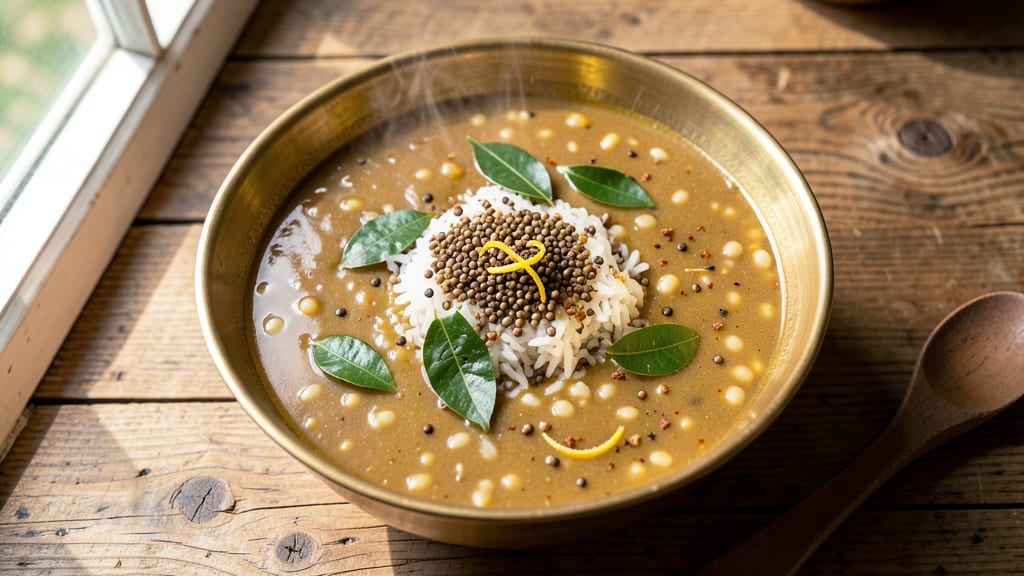
Attukal Pongal soup brings the warmth of Tamil Nadu's sacred Attukal Amman Temple traditions to your kitchen, transforming simple rice and lentils into a fragrant, hearty comfort dish. 🌟 This vegetarian specialty—often prepared during festivals—combines tender moong dal, fluffy rice, and aromatic spices for a soup that's both nourishing and deeply flavorful.
The secret lies in the tempering (tadka), where mustard seeds, curry leaves, and ghee create layers of aroma that define this dish's soul.
What makes this recipe special is its balance of simplicity and tradition. Unlike many South Indian stews, Attukal Pongal soup maintains a delicate, broth-like consistency while delivering maximum flavor through careful spice blooming and slow cooking.
The dish's cultural significance stems from its preparation during temple festivals, where it's offered as prasadam—now you can recreate that sacred comfort at home.
The result is a velvety soup with perfectly cooked rice and lentils that melt in your mouth, all suspended in a lightly spiced broth that's both comforting and satisfying.
The tempering adds a final burst of aroma that transforms this humble soup into something extraordinary—ideal for chilly evenings or festive gatherings.
This recipe serves 4 and takes about 45 minutes to prepare, making it perfect for weeknight dinners or special occasions. The key to success lies in the tempering technique and maintaining the right water-to-rice ratio—both of which I'll guide you through step by step.
Ingredients for attukal soup recipe in tamil
Simple rice and lentils meet sacred South Indian traditions in this comforting Attukal Pongal soup.
| Ingredient | Amount | Notes |
|---|---|---|
| Moong Dal (Split Yellow Lentils) 🌾 | 1 cup | Peeled, washed thoroughly |
| Long-Grain White Rice 🍚 | ½ cup | Rinsed until water runs clear |
| Ghee (Clarified Butter) 🧈 | 3 tbsp | For authentic tempering aroma |
| Mustard Seeds 🌿 | ½ tsp | Whole, light brown preferred |
| Curry Leaves 🌿 | 10 whole | Fresh, slightly crushed |
| Asafoetida (Hing) 🌶️ | ¼ tsp | Pinch for authentic flavor |
| Dried Red Chilies 🌶️ | 2 whole | Kashmiri or small red chilies |
| Cumin Seeds 🌿 | ½ tsp | Toasted lightly for aroma |
| Turmeric Powder 🧂 | ¼ tsp | Freshly ground preferred |
| Coconut Oil 🥥 | 2 tbsp | For cooking lentils and rice |
| Salt 🧂 | ¾ tsp | Adjust to taste |
| Fresh Coriander Leaves 🌿 | ¼ cup | Chopped, for garnish |
| Water 💧 | 4 cups | Filtered preferred |
| Ginger-Garlic Paste 🧄 | 1 tbsp | Freshly made, 1:1 ratio |
The moong dal and rice are the heart of this dish—soaking the dal for 20 minutes ensures perfect tenderness. For the spices, Indian grocery stores like Patel Brothers or local Indian markets carry the best curry leaves and mustard seeds. The ghee is non-negotiable here—it's what creates that signature temple aroma. If you can't find light brown mustard seeds, yellow works too, but toasting them first brings out their nutty flavor. The ginger-garlic paste should be freshly made; store-bought versions often have preservatives that dull the flavor.
No ghee? Coconut oil works perfectly—just use the same amount. Short on curry leaves? Fresh bay leaves at half the amount add depth, though they won't be exact. The dried red chilies can be omitted entirely if you prefer mild heat, but the tempering spices still need toasting. For the rice, jasmine rice works beautifully if you want extra fragrance. The key is rinsing both rice and dal until the water runs clear—this prevents grittiness and ensures fluffy texture. If you're using pre-soaked dal from a can, rinse it thoroughly to remove excess sodium.
This soup tastes even better the next day as flavors meld—store in an airtight container for up to 3 days. For extra comfort, serve with a dollop of yogurt and a sprinkle of roasted cumin powder. The tempering spices keep for 6 months in a sealed jar, so make extra if you're planning to cook this often. Freeze portions if you won't use them within a week—just thaw overnight in the fridge before reheating.
Why You'll Love This Recipe
- No Chopping Needed: I swear by this one—just soak the moong dal overnight, rinse, and toss it into the pot with rice and water. The mustard seeds and curry leaves sizzle in ghee while you wait, so the only prep is stirring.
- Umami Bomb: That first spoonful? The ghee blooming with mustard seeds and curry leaves, then the dal’s creamy texture—it’s like a warm hug in a bowl. Honestly, the rice soaks up all the flavor without needing extra spices.
- Weeknight Magic: Between us, this is my go-to when I’m exhausted but need food fast. The dal and rice cook together, so one pot means less cleanup, and it reheats perfectly for lunch the next day—no soggy rice here.
- Budget-Friendly Staples: Moong dal and rice are cheap, and a little ghee goes a long way. I make this twice a week, and it’s always satisfying without breaking the bank. Plus, leftovers taste even better the second day.
Step-by-step instructions for Attukal Pongal soup
Here's how to make this fragrant, hearty soup that's pure comfort in a bowl.
🍳 Step 1: Cook the Rice and Lentil Base
In a pressure cooker, combine the 1 cup moong dal and 0.5 cup long-grain white rice with 4 cups water. I always rinse both ingredients separately first - the dal until water runs clear, and the rice until it stops releasing starch. This prevents grittiness and ensures proper texture.
Bring to a rolling boil, then add 0.25 tsp turmeric powder and 0.75 tsp salt. Seal the cooker and pressure cook for 4 whistles on medium heat. The moment the pressure drops naturally, let it sit for 5 minutes before opening - this resting period ensures the grains cook through completely. You'll know it's perfect when the dal and rice are tender but still hold their shape slightly.
🔥 Step 2: Prepare the Tempering (Tadka)
In a separate heavy-bottomed pan, heat 2 tbsp coconut oil on medium heat. Add 0.5 tsp cumin seeds and let them sizzle for 30 seconds until they release their aroma - you'll see them dance and pop. Then add 2 whole dried red chilies and 10 whole curry leaves. Watch carefully as the chilies darken slightly and the curry leaves begin to crisp at the edges.
Lower the heat to medium-low and add 0.5 tsp mustard seeds. Let them splutter for 10 seconds before adding 0.25 tsp asafoetida. This is where the magic happens - the hing dissolves instantly, releasing its umami depth. Immediately pour this tempering over the cooked dal-rice mixture in the cooker. Stir gently but thoroughly to distribute the flavors evenly throughout.
👨🍳 Step 3: Finish with Ghee and Fresh Herbs
Return the cooker to low heat and add 3 tbsp ghee. Let it melt completely, then stir in 1 tbsp ginger-garlic paste. Cook for 1-2 minutes until the raw aroma disappears and you can smell the garlic mellowing. This step is crucial - it transforms the simple dal into something truly aromatic.
Finally, fold in 0.25 cup chopped fresh coriander leaves. Taste and adjust salt if needed - the ghee often makes the dish rich enough that you might not need additional salt. The soup should be fragrant, with layers of cumin, mustard, and the earthy notes of hing. Let it sit covered for 5 minutes before serving to allow all the flavors to meld together.
Pro Tips For Making Attukal Soup Recipe In Tamil
- Bloom the Mustard: Crack mustard seeds into a dry pan first—just for 10 seconds—before adding ghee. This prevents them from splattering like a firework show and ensures they pop uniformly. I learned this the hard way after scrubbing mustard off my ceiling.
- Soak Rice Properly: Rinse the long-grain rice three times and soak for at least 20 minutes in warm water. This removes excess starch (which makes the soup gummy) and ensures the rice stays firm when cooked. Skimp here, and you’ll end up with a gluey mess.
- Low and Slow for Dal: Once the moong dal starts cooking, reduce heat to the lowest simmer you can tolerate. High heat turns dal mushy fast—you want it creamy but intact, not a paste. Stir every 2 minutes to prevent sticking, even if it feels tedious.
- Ghee First, Curry Leaves Last: Heat ghee until it smells nutty (not smoking), then add mustard seeds—only then toss in curry leaves. This preserves their delicate aroma instead of burning them instantly. Sounds picky, but it’s the difference between "good" and "restaurant-quality."
Storing and reheating this recipe
Refrigerator Storage
Store your Attukal Pongal soup in an airtight glass container for up to 3 days in the fridge. The flavors actually deepen overnight as the spices meld together beautifully. I always let it cool completely before transferring to prevent condensation, which can make the rice and dal soggy. 💫
When reheating, transfer to a pot and add 2-3 tablespoons of water to prevent sticking. Warm over medium-low heat for 5-7 minutes, stirring occasionally. The ghee will give it that rich, temple-like aroma again—just like fresh!
Freezer Storage
For longer storage, freeze portions in airtight, freezer-safe containers for up to 3 months. Leave about 1 inch of headspace since the soup expands slightly when frozen. I like using quart-sized glass containers because they thaw evenly and are microwave-safe.
Thaw overnight in the fridge before reheating. For quick use, place the frozen container in a bowl of warm water for 30 minutes to speed up the process. Never microwave directly from frozen—this can make the dal and rice mushy.
Reheating Methods
My preferred method is stovetop reheating—it preserves texture perfectly. Heat on low-medium until steaming (about 8-10 minutes), then stir in a splash of water if needed. The tempering spices will wake up beautifully, giving you that fresh-from-the-kitchen flavor.
For microwave reheating, use 50% power in 1-minute intervals, stirring between each. Cover with a damp paper towel to retain moisture. The soup should reach 165°F internal temperature—use a thermometer if unsure. 🔥
Flavor Preservation
The ghee in this soup acts as a natural preservative, keeping flavors vibrant longer. If you notice the tempering spices losing their pop after reheating, simply toast ½ tsp cumin seeds and 1 tsp mustard seeds in a dry pan, then sprinkle over the reheated soup for instant freshness.
For extra comfort, serve with a dollop of plain yogurt and a sprinkle of roasted cumin powder. The yogurt cuts through the richness while the cumin adds another layer of warmth—just like at the temple festivals! ✨
Nutrition facts
Frequently asked questions
What makes Attukal Pongal soup different from regular dal?
This soup transforms simple moong dal and rice into a temple-inspired dish through its tempering technique. The key difference lies in the ghee-based tadka with mustard seeds, curry leaves, and asafoetida that creates layers of aroma, plus the delicate balance between rice and lentils that maintains a soup-like consistency rather than a thick stew. The ginger-garlic finish elevates it beyond basic dal.
Can I make this soup without a pressure cooker?
Yes! Use a heavy-bottomed pot and simmer the dal-rice mixture with 4 cups water for 25-30 minutes on medium-low heat, stirring occasionally. Add 1 extra cup of water if needed to prevent burning. The cooking time will be longer, but you'll still achieve tender rice and dal. Just ensure the water level covers the ingredients by at least 2 inches throughout cooking.
Why does my Attukal Pongal soup taste bland?
Blandness usually comes from one of three issues: under-tempering (spices not toasted enough), insufficient ghee (use all 3 tbsp for authentic flavor), or overcooking which dulls spices. Double-check your tempering—mustard seeds should splutter audibly and curry leaves darken slightly. For extra depth, add ½ tsp black pepper during the final ghee step or a pinch of sambar powder when serving.
Is this soup gluten-free or vegan?
This recipe is naturally gluten-free and can be made vegan by omitting the ghee and using coconut oil throughout. For extra richness, try vegan ghee made from coconut oil. The dish maintains its traditional flavors while accommodating dietary needs—just ensure all spices are certified gluten-free if you're sensitive to cross-contamination.
How do I adjust the consistency for a thicker or thinner soup?
For a thicker soup, reduce the water by ½ cup (use 3.5 cups instead of 4). For a thinner, brothier version, add ½ cup water after cooking. The ideal consistency should coat the back of a spoon but still be pourable. If using a pressure cooker, adjust water ratios accordingly—too much water makes the rice mushy, while too little can burn the spices.