
Soups & Stews
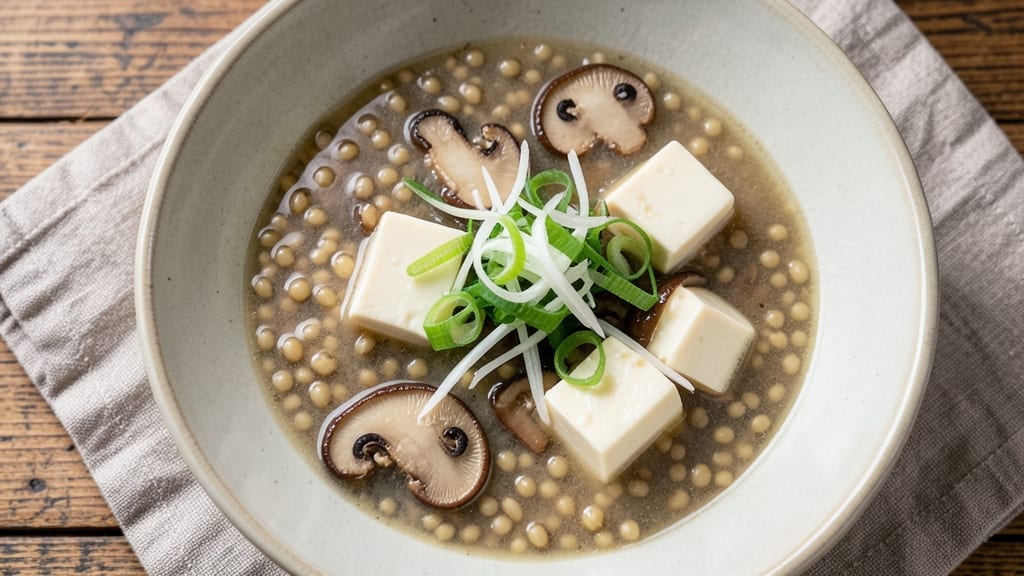
This barley miso soup recipe delivers that perfect balance of umami depth and comforting texture—where tender barley pearls float in a velvety broth infused with fermented miso goodness.
The secret lies in simmering the barley just right so it absorbs the broth without turning mushy, while the miso paste dissolves smoothly for that signature savory richness.
What makes this version stand out is how it transforms simple ingredients into a restaurant-quality bowl that's both vegetarian-friendly and packed with layers of flavor.
The beauty of this recipe is its flexibility—you can keep it traditional with just miso, barley, and dashi stock, or elevate it with modern twists like shiitake mushrooms, silken tofu, or a drizzle of toasted sesame oil.
The broth stays clear and aromatic thanks to a gentle simmer, while the barley develops that satisfying chewiness that makes every spoonful worth waiting for. It's the kind of soup that warms you up from the inside out, especially when topped with fresh green onions or a sprinkle of furikake.
What you'll achieve is a bowl of soup that's perfectly balanced—neither too thick nor too thin, with barley that's tender but still holds its shape and a miso broth that's rich without being overpowering.
The aroma alone will have everyone gathering around the table, and the first bite delivers that perfect harmony of umami, saltiness, and subtle sweetness. This is the kind of recipe that becomes a weekly staple once you try it.
Whether you're serving it as a light lunch, a comforting dinner, or a side to sushi, this barley miso soup recipe adapts effortlessly. The best part? It reheats beautifully, making it ideal for meal prep. Let's get started on creating your own bowl of umami perfection.
Ingredients for barley miso soup
Simple ingredients that transform into restaurant-quality umami perfection in one pot.
| Ingredient | Amount | Notes |
|---|---|---|
| Barley Pearls 🌾 | ½ cup | Rinsed before cooking |
| White Miso Paste 🧂 | 2 tbsp | High-quality fermented |
| Dashi Stock 🍵 | 4 cups | Homemade or quality store-bought |
| Silken Tofu 🥬 | ½ block | Cubed, for creaminess |
| Shiitake Mushrooms 🍄 | 4 whole | Stemmed, sliced thin |
| Green Onions 🧅 | 3 whole | Sliced, for garnish |
| Sesame Seeds 🌰 | 1 tbsp | Toasted, for crunch |
| Fresh Ginger 🧅 | 1 tbsp | Finely grated, aromatic |
| Sesame Oil 🫒 | 1 tsp | Toasted, for aroma |
| Diamond Crystal Kosher Salt 🧂 | ½ tsp | For seasoning |
| Furikake Seasoning 🌶️ | 1 tbsp | Optional, for topping |
| Water 💧 | 2 cups | For diluting miso |
The miso paste is the heart of this soup—look for white miso at Asian markets or the international aisle of your grocery store. Marukome or Hokkaido brand are my go-tos, but any quality brand works. Fresh ginger? Buy it whole and grate only what you need—pre-grated loses its punch fast. The barley pearls should be rinsed before cooking to remove any dust, and pot barley (not pearl) gives the best texture. For the dashi stock, if you can't find it pre-made, instant dashi granules from Hajime dissolve easily in hot water.
No miso paste? Soy sauce plus a pinch of sugar gets you close, though it won't have that same fermented depth. Skip the shiitake mushrooms? Cremini or white mushrooms work too. The silken tofu adds creaminess without overpowering—if you're avoiding tofu, extra-firm tofu cubed and pan-fried works as a substitute. For the ginger, if you're out, a pinch of ground ginger plus extra zest from a lemon will help. The sesame oil is non-negotiable for that nutty aroma—Trader Joe's has a great affordable option. And if you can't find furikake, toasted sesame seeds plus a pinch of seaweed flakes make a great DIY version.
This soup tastes even better the next day—reheats beautifully in 2 minutes. Store leftovers in an airtight container in the fridge for 4-5 days, or freeze for 3 months. I like to double the batch and portion it into containers for quick lunches. The barley keeps its texture perfectly when reheated, and the miso flavor deepens. Garnish with fresh green onions right before serving—they wilt fast, so don't add them to the pot.
Why You'll Love This Recipe
- One-Pot Magic: I swear by this recipe—just a pot, a few ingredients, and 20 minutes later, you’ve got a steaming bowl of umami gold. No chopping, no fuss, just the silken tofu and shiitakes melting into that rich miso-dashi broth while the barley plumps up effortlessly.
- Umami Bomb: That first spoonful? Chef’s kiss. The white miso paste and dashi stock create this deep, savory punch that wraps around every bite, while the earthy shiitakes and creamy tofu add layers of texture. It’s the kind of flavor that makes you want to slurp it straight from the pot.
- Meal Prep MVP: Between us, this soup is my secret weapon for busy days. Cook a big batch on Sunday, and you’ve got lunch or dinner covered all week—just reheat and add a splash of water. The barley holds up perfectly, and the tofu stays silky, not rubbery.
- Budget-Friendly Powerhouse: Honestly, it’s hard to beat the value here. Barley and miso are cheap staples, dashi stock is a one-time investment, and mushrooms stretch further than you’d think. I’ve fed four people for under $10, and everyone’s left happy—even my picky teenager.
Step-by-step instructions for barley and miso soup
Here's how to create a deeply satisfying bowl where chewy barley pearls meet rich miso broth.
Prepare the Barley and Aromatics
Rinse the 0.5 cup barley pearls under cold water until the water runs clear. This removes excess starch that can make the soup cloudy. In a medium saucepan, combine the rinsed barley pearls with the 4 cups dashi stock and bring to a gentle boil over medium-high heat.
Once boiling, immediately reduce heat to medium-low and add the 1 tablespoon finely grated fresh ginger. The broth should simmer gently—you'll see small bubbles breaking the surface but not a rolling boil. Simmer uncovered for 20 minutes, stirring occasionally to prevent sticking. The barley should be tender but still hold its shape, with a slight bite remaining.
Build the Miso Base
In a separate small bowl, whisk together the 2 tablespoons white miso paste with the 2 cups water until completely dissolved. The mixture should be smooth with no visible lumps. This is your flavor foundation—don't skip the whisking, as miso contains salt crystals that need to fully integrate.
After the barley has simmered for 20 minutes, carefully ladle out about 1 cup of the hot broth into the miso mixture. Whisk vigorously to temper the miso—this prevents it from activating and making the soup bitter. Then pour the miso mixture back into the main pot and stir gently to combine. Return the heat to medium-low and let the soup simmer for an additional 5 minutes to meld all the flavors.
Add Mushrooms and Tofu
While the soup simmers, prepare the shiitake mushrooms by slicing them thinly (about 1/8-inch thick) and removing the stems. Add the sliced mushrooms to the pot and cook for 3-4 minutes until they soften and absorb the broth's flavors. The mushrooms should retain some texture but become tender enough to eat easily.
Cut the 0.5 block silken tofu into small cubes (about 1/2-inch pieces). Gently add them to the pot and let them warm through for 2-3 minutes. Silken tofu cooks quickly and absorbs flavors beautifully—don't let it sit too long or it will turn rubbery. Taste the broth and adjust seasoning with the 0.5 teaspoon diamond crystal kosher salt if needed. The soup should be balanced between the umami of the miso and the subtle saltiness.
Finish with Garnishes
Just before serving, drizzle in the 1 teaspoon sesame oil and stir gently. The oil should float on top for a moment before dispersing, adding a nutty aroma to each bowl. Toast the 1 tablespoon sesame seeds in a dry skillet over medium heat for 1-2 minutes until fragrant and lightly golden. Then slice the 3 green onions into 1-inch pieces.
Ladle the soup into bowls, garnishing each serving with the toasted sesame seeds and green onions. Sprinkle with the 1 tablespoon furikake seasoning for that extra Japanese restaurant touch. Serve immediately while the barley is still warm and the tofu maintains its silky texture. Each bite should deliver a perfect balance of chewy barley, creamy tofu, earthy mushrooms, and that deep umami richness from the miso.
Pro Tips For Making Barley Miso Soup
- Soak the Barley Properly: Barley pearls need at least 30 minutes in hot water (not boiling) to soften—skipping this step leaves them chewy and underwhelming. I learned this the hard way when my soup tasted like I’d forgotten half the ingredients.
- Dissolve Miso Gently: Stir miso paste into cooled broth (below 160°F/70°C) to avoid killing its probiotics and bittering the flavor. After burning my first batch, I now use a ladle to mix it in slowly—no splashing, no rushing.
- Prep Mushrooms Right: Slice shiitake caps thinly but keep stems intact—toss them in first, then remove when done. The stems add depth without overpowering, and they’re the part people usually waste (don’t).
- Upgrade with Umami Boosters: Add a splash of soy sauce or a pinch of bonito flakes to the dashi stock—it cuts through the barley’s earthiness and makes the miso sing. Sounds simple, but it’s the difference between "good" and "restaurant-quality."
Serving suggestions for this dish
Traditional Japanese Serving Style
Serve this barley miso soup in wide, shallow bowls—traditional Japanese donabe or chawan bowls work beautifully. The wide rim allows you to add all the garnishes without overcrowding, and the shallow depth keeps the barley and tofu visible.
I like to use ceramic bowls because they retain heat longer and enhance the soup's aroma. For an authentic touch, place a small bamboo steam basket beside the table so guests can warm their bowls with hot water before serving. 🍜
Modern Plating Ideas
For a restaurant-style presentation, arrange the soup in a clear glass bowl to showcase the barley's chewy texture and the mushrooms' earthy tones. Float a small piece of silken tofu on top and scatter shiitake slices artfully around the rim.
Drizzle sesame oil in a zigzag pattern and sprinkle toasted sesame seeds for visual contrast. Add a fresh green onion garnish on the side for a pop of color. This approach makes the soup look as delicious as it tastes! ✨
Bread Pairings
This soup pairs perfectly with steamed rice or Japanese milk bread for a complete meal. The soft, slightly sweet bread soaks up the miso broth beautifully, while the rice adds a neutral base to balance the umami flavors.
For a heartier option, serve with sourdough toast or crusty baguette slices—the crust adds a satisfying crunch. I also love pairing it with miso soup crackers for a lighter, crunchy alternative. 🥖
Seasonal Garnishes
Adjust your garnishes based on the season. In spring and summer, add thinly sliced cucumber or edible flowers for freshness. For autumn and winter, sprinkle crispy fried shallots or toasted nori strips for extra texture.
A drizzle of yuzu kosho (citrus chili paste) brightens the soup in cooler months, while mint leaves add a refreshing twist in summer. These seasonal touches elevate the dish without overpowering its umami base. 🍃
Meal Pairing Flexibility
This soup works as a standalone light meal, a side dish, or even a cleansing palate cleanser before a heavier Japanese meal like sushi or tempura. For a full meal, pair it with grilled fish, teriyaki chicken, or vegetable tempura.
If serving as a starter, keep portions small—about 1 cup per person—to let guests enjoy the full experience without feeling overly full. The versatility makes it perfect for any occasion! 🍣
Nutrition facts
Frequently asked questions
Can I substitute barley with another grain?
Yes! For a quicker version, use quinoa (simmer for 12-15 minutes) or buckwheat soba noodles (add after the miso step). If you prefer a chewier texture, try farro or wild rice, but increase simmering time to 25-30 minutes. Avoid white rice—it turns mushy and absorbs too much broth.
Why does my miso soup turn cloudy?
Cloudiness usually means the miso paste wasn't fully dissolved or the barley released too much starch. First, whisk the miso with cold water before adding to hot broth to prevent lumps. Second, rinse barley thoroughly before cooking. For extra clarity, strain the broth through a fine-mesh sieve after simmering the barley.
How do I make this soup spicier?
Add heat with red miso paste (replace half the white miso) or stir in 1 tsp gochugaru (Korean chili flakes) at the end. For depth, try 1 tsp yuzu kosho (citrus chili paste) or a dash of sriracha drizzled over each bowl. Start with small amounts—you can always add more!
Can I make this gluten-free?
Use gluten-free tamari instead of soy-based dashi, and check that your miso paste is certified gluten-free (many are naturally GF). The barley itself contains gluten, so substitute with certified gluten-free grains like quinoa or millet. Always verify labels—some miso brands process in gluten-containing facilities.
What's the best way to reheat leftovers?
Reheat gently on the stove over low heat with a splash of water to restore moisture. Stir frequently to prevent sticking. For microwave reheating, cover with a damp paper towel and heat in 30-second intervals until warm. Never boil—this can make the barley mushy and the broth overly concentrated.