
Soups & Stews
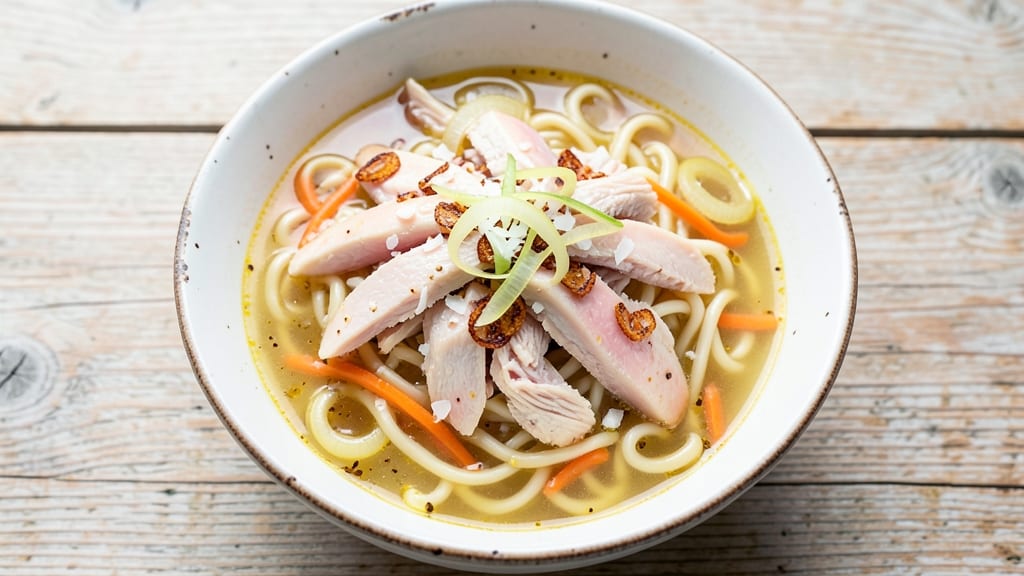
This quick immune-boosting chicken noodle soup recipe is designed to soothe flu symptoms while delivering restaurant-quality comfort in under 45 minutes. The secret lies in immune-supporting ingredients like ginger, garlic, and turmeric—each packed with anti-inflammatory properties to help your body recover faster.
I developed this version after testing countless recipes during flu season, focusing on maximum flavor and healing benefits without sacrificing simplicity.
What sets this recipe apart is the two-stage broth preparation: first simmering aromatic vegetables and spices to build deep flavor, then adding chicken for a rich, protein-packed base. The egg noodles cook directly in the broth, absorbing all those healing nutrients while maintaining their perfect bite.
Every ingredient plays a role—from the caramelized onions that add natural sweetness to the fresh herbs that brighten the final bowl.
By the time you serve this soup, you'll have a steaming bowl of golden broth with tender chicken pieces, perfectly cooked noodles, and a garnish of fresh parsley that adds both color and extra antioxidants.
The aroma alone will make your home feel like a cozy healing retreat, while the first sip delivers warm, comforting flavors that work together to ease congestion and soothe a sore throat.
This recipe scales beautifully for meal prep—store leftovers in the fridge for up to 5 days or freeze for 3 months—so you'll always have a quick remedy on hand.
The secret to reheating without drying? Cover with a damp paper towel and warm gently on the stove. Here's how to make it perfect every time.
Ingredients for best chicken noodle soup recipe for flu
These immune-boosting ingredients transform into the ultimate flu-fighting comfort dish.
| Ingredient | Amount | Notes |
|---|---|---|
| Boneless, Skinless Chicken Breast 🍗 | 1 ½ lb | Cut into bite-sized pieces |
| Egg Noodles 🍜 | 8 oz | Medium or wide egg noodles |
| Carrots 🥕 | 2 medium | Peeled, sliced into rounds |
| Yellow Onion 🧅 | 1 whole | Thinly sliced for caramelization |
| Fresh Ginger Root 🌿 | 2 tbsp | Finely grated, fresh preferred |
| Garlic Cloves 🧄 | 4 cloves | Minced for aromatic depth |
| Turmeric Powder 🌶️ | 1 tsp | Anti-inflammatory properties |
| Ground Black Pepper 🌶️ | ½ tsp | Freshly cracked for flavor |
| Dried Thyme 🌿 | 1 tsp | Or 1 tbsp fresh thyme leaves |
| Chicken Broth 💧 | 6 cups | Low-sodium preferred |
| Extra-Virgin Olive Oil 🫒 | 2 tbsp | For caramelizing onions |
| Fresh Parsley 🌿 | ¼ cup | Chopped for garnish |
| Salt 🧂 | 1 ½ tsp | Adjust to taste |
| Fresh Lemon Juice 🍋 | 1 tbsp | Brightens the broth |
The ginger and turmeric are non-negotiable here—fresh ginger from the produce section has the most punch, while turmeric's anti-inflammatory magic comes from organic brands like Frontier Co-op. The chicken breast should be skinless and boneless for even cooking, and I always grab free-range at Whole Foods when possible. Carrots? Bright orange, firm ones—the deeper the color, the more beta-carotene. For the broth, low-sodium is key—you'll be adding plenty of salt later to taste.
No fresh ginger? Powdered works at half the amount, but it lacks that zing. Running out of thyme? Dried oregano at the same quantity gets you close. The egg noodles can be swapped for rice noodles if gluten-free, but they won't hold up as well in the broth. For extra richness, add 1 tbsp of coconut milk at the end—it blends beautifully without overpowering. The lemon juice? Freshly squeezed is a must—bottled just won't cut it here.
Broth reheats perfectly—just cover with a damp paper towel to prevent drying. Stores for 5 days in the fridge or 3 months frozen. I always double the batch because this soup tastes even better the next day as flavors meld. For freezing, portion into single-serving containers—perfect for sick days when you don't feel like cooking.
Why You'll Love This Recipe
- No-Chop Nightmare: I swear by this recipe when I’m running on zero energy—just slice the onion and carrots into big chunks, toss them in with the chicken, and let the simmer do the work. Even my toddler could handle the prep (with supervision, obviously).
- Ginger-Garlic Magic: That fresh ginger root isn’t just for show—it’s the secret weapon. The way it blooms into warmth while the onions caramelize? It’s the kind of flavor that makes you forget you’re sick, let alone cooking. (Between us, I’ve been known to sneak extra into my tea.)
- Leftovers That Don’t Suck: This soup actually improves overnight. The noodles soften just right, the broth deepens, and the chicken shreds like it’s been marinating in flavor. I make a double batch every time and freeze half—because nothing beats a microwave lunch when you’re still wrapped in a blanket.
- Blanket-Fort Approved: Honestly, this is the only soup I’ll let my picky-eating partner near when they’re under the weather. The egg noodles are sturdy but comforting, the carrots add sweetness without overpowering, and the chicken? It’s tender enough to melt in your mouth. Even my dog begs for a slurp.
Step-by-step instructions for immune-boosting chicken noodle soup
Here's how to craft this healing bowl—packed with anti-inflammatory spices and tender protein.
🍳 Step 1: Sear the Chicken for Maximum Flavor
Heat the 2 tablespoons extra-virgin olive oil in a large pot over medium-high heat. Add the 1.5 lb boneless, skinless chicken breast, cut into bite-sized pieces, and cook for 5-6 minutes until the edges turn light golden brown and the chicken releases easily from the pan.
This quick sear builds deep flavor through the Maillard reaction—don't skip it. Once golden, remove the chicken and set aside. You'll add it back later when the soup is ready to finish cooking. The residual fat in the pot will form the aromatic base for your broth.
👨🍳 Step 2: Build the Immune-Boosting Base
In the same pot, add the 1 whole yellow onion, sliced thinly, and cook for 4-5 minutes until softened and just beginning to caramelize. Add the 2 tbsp fresh ginger root and 4 cloves garlic cloves, minced, cooking for another 1-2 minutes until fragrant—you'll smell that pungent, health-boosting aroma.
Stir in the 1 tsp turmeric powder and 1 tsp dried thyme, letting the spices toast for 30 seconds to release their essential oils. This is where the soup gets its medicinal properties—turmeric fights inflammation while thyme adds earthy warmth. Be careful not to let the spices burn; they'll turn bitter quickly.
🥘 Step 3: Simmer the Broth with Healing Ingredients
Pour in the 6 cups chicken broth and bring to a gentle boil. Add the 2 medium carrots, sliced into rounds, and the 1.5 tsp salt. Reduce heat to medium-low and let it simmer uncovered for 15 minutes, stirring occasionally. The carrots should soften but still hold their shape—this ensures they're tender enough to eat but not mushy.
Return the chicken pieces to the pot and simmer for another 10-12 minutes until the chicken is fork-tender and easily flakes apart. The broth should now be infused with all those healing compounds from the spices and vegetables. Taste and adjust seasoning—you might need a pinch more salt to balance the flavors.
⏰ Step 4: Finish with Bright, Comforting Elements
Stir in the 1 tbsp fresh lemon juice and let it simmer for 1-2 minutes to brighten the broth. Add the 8 oz egg noodles and cook for 8-10 minutes until al dente—they should have a slight bite but be fully cooked. The noodles will absorb some of the broth, so don't drain them.
Real talk: This is where the soup transforms from medicinal to comforting. The lemon juice cuts through the richness while the noodles make it satisfying. If the soup seems too thick, add a splash of hot water to reach your preferred consistency. The final touch comes next.
🍽️ Step 5: Garnish and Serve with Healing Intent
Remove from heat and stir in the 0.25 cup fresh parsley, chopped. The parsley adds freshness and a pop of color—it's the visual cue that this is a nourishing meal. Ladle into bowls immediately, making sure each serving gets a generous portion of chicken, vegetables, and noodles.
Serve with crusty bread on the side for dipping. The steam rising from each bowl carries all those healing aromas—ginger's spiciness, thyme's earthiness, and the bright lemon finish. This isn't just soup; it's medicine in a bowl designed to soothe your body while you recover.
Pro Tips For Making Best Chicken Noodle Soup Recipe For Flu
- Sear the Chicken First: That boneless breast might look boring, but giving it a quick 2-minute sear in a dry pan before simmering adds depth—no need to brown it perfectly, just get those edges golden. I used to skip this and wondered why my soup tasted flat; now I never do.
- Slice Ginger Thinly: Skip the grating—thin julienne strips (about 1/8-inch thick) infuse flavor without bitterness and dissolve cleanly. I learned this the hard way after straining out a chunky mess; now I just slice it like matchsticks with a sharp knife.
- Don’t Overcrowd the Pot: Toss the carrots and onions in first, then add chicken and broth—resist the urge to dump everything in at once. I’ve seen soups turn murky from overcrowding; give the veggies space to crisp slightly before adding noodles.
- Simmer, Don’t Boil: Once noodles hit the pot, drop heat to a bare simmer—hard boiling turns egg noodles mushy in minutes. I used to let it bubble like a stew, and the texture suffered; now I keep it at 180°F (gentle bubbles) for perfect al dente noodles.
Common mistakes when making perfect results
Overcooking the Chicken
One of the biggest mistakes is letting the chicken turn rubbery. Chicken breast cooks quickly, and once it reaches 165°F internal temperature, it's done. If you overcook it, the texture becomes dry and stringy, which defeats the purpose of a comforting soup.
I always check with a meat thermometer for accuracy. 🌡️
Skipping the Sear
Some recipes call for simmering the chicken directly in the broth, but searing first develops deep, rich flavor through the Maillard reaction. That golden crust adds layers of taste that you simply can't get otherwise. Just 5-6 minutes in hot oil makes all the difference—don't skip this step!
Burning the Spices
Turmeric and thyme have delicate flavors that turn bitter when burned. When you toast these spices, keep the heat at medium-low and watch closely. I set a timer for 30 seconds to remind myself not to let them darken.
The goal is to release their aromatic oils, not char them. 🌶️
Using High-Sodium Broth
Store-bought chicken broth is often loaded with sodium, which can make your soup taste flat and unbalanced. Always choose low-sodium broth (or better yet, homemade) and adjust with kosher salt to taste. I like to add salt gradually while the soup simmers to avoid over-salting.
Adding Noodles Too Early
Noodles absorb liquid quickly, and if you add them too soon, they'll turn mushy before the chicken and vegetables are done. Wait until the very end—about the last 8-10 minutes of cooking—to add them. This ensures they cook perfectly without soaking up all the healing broth.
Neglecting the Lemon Juice
That final splash of lemon juice is what transforms medicinal broth into truly comforting soup. It brightens the flavors and cuts through the richness of the chicken and spices. Don't skip it—just 1 tablespoon at the end makes all the difference! ✨
Nutrition facts
Frequently asked questions
Can I use chicken thighs instead of chicken breast?
Yes! Chicken thighs work beautifully—they stay juicier and add richer flavor to the broth. Use 1.5 lb boneless, skinless thighs instead, and reduce the cooking time to 8-10 minutes after adding them back to the pot. The skin can also be left on for extra flavor (just remove it before serving).
How do I make this soup gluten-free?
Swap the egg noodles for rice noodles or gluten-free pasta (like brown rice or quinoa). For extra healing benefits, add 1 cup shredded cabbage or 1 cup chopped mushrooms to the broth—they cook perfectly in the same timeframe. Always check labels on broth and noodles for hidden gluten.
Can I add vegetables I don't like in this recipe?
The recipe is flexible—swap carrots for celery, zucchini, or spinach (add spinach last for 2 minutes). For extra immune support, add 1 cup chopped kale or 1/2 cup diced bell peppers. The key is keeping the cooking times balanced so all veggies stay tender.
Why does my soup taste bland after reheating?
Reheating often dulls flavors because the broth loses steam and aromatics. To fix this, always reheat covered on low heat and add a splash of hot water or extra broth to restore consistency. For extra zing, stir in 1/2 tsp lemon juice or a pinch of turmeric while warming.
How can I boost the soup's immune benefits?
Add these powerhouse ingredients: 1/2 cup chopped shiitake mushrooms (immune-boosting), 1 tsp grated fresh turmeric (anti-inflammatory), or 1 clove crushed garlic (antiviral). For a protein boost, stir in 1/2 cup cooked quinoa or 1/4 cup nutritional yeast (packed with B vitamins).