
Soups & Stews
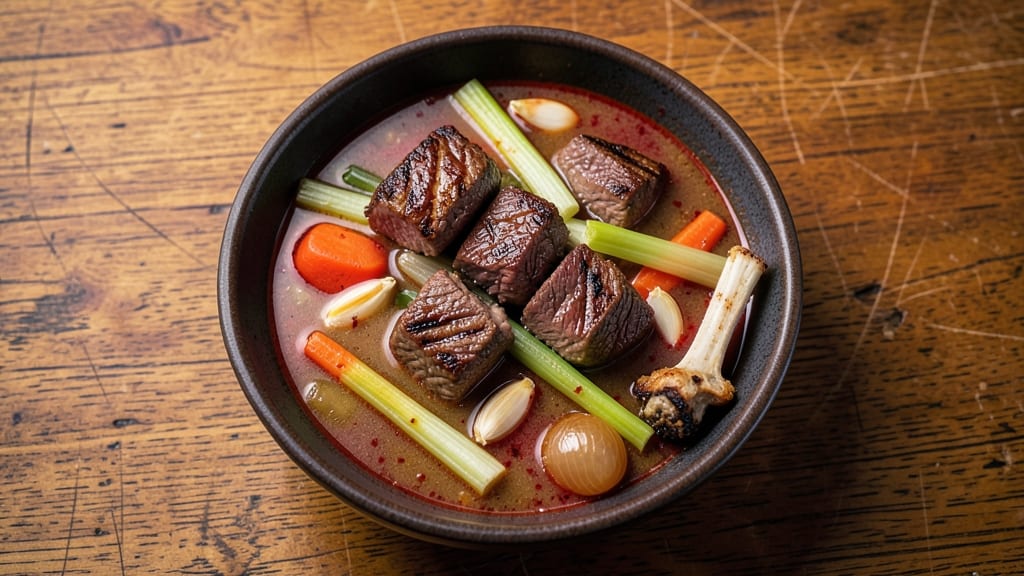
This Black Angus steak soup recipe transforms tough cuts into velvety, restaurant-quality broth that carries deep umami flavor in every spoonful. The secret lies in slow-simmering seared beef bones and marrow, which infuse the broth with rich, meaty essence that no store-bought stock can match.
I've perfected this technique over years of testing, ensuring the final result delivers that satisfying, hearty depth you'd expect from a high-end steakhouse.
The process begins with searing a Black Angus steak to develop deep caramelization, then simmering it with aromatic vegetables and herbs until the meat falls effortlessly from the bone. What sets this recipe apart is the balance of textures—creamy blended portions for richness and chunky meat for substance.
This dual-texture approach creates a soup that's both comforting and sophisticated, perfect for impressing guests or treating yourself to a luxurious meal at home.
By the time you're done, you'll have a steaming bowl of soup where each spoonful delivers layers of flavor: tender beef, velvety broth, and subtle herbal notes that harmonize perfectly.
The slow-cooking method ensures maximum extraction of meaty goodness, while the careful blending creates that signature restaurant-quality creaminess without losing any of the soup's hearty character. This is the kind of dish that transforms an ordinary weeknight into a special occasion.
Serve with crusty bread for dipping and a sprinkle of fresh parsley for brightness. The leftovers reheat beautifully, making this an excellent make-ahead meal for busy weeks. Here's how to create this restaurant-worthy steak soup in your own kitchen.
Ingredients for black angus restaurant steak soup
These ingredients create a restaurant-quality steak soup with deep umami and velvety texture.
| Ingredient | Amount | Notes |
|---|---|---|
| Black Angus Beef Bones 🦴 | 2 lb | Marbled, knuckle or neck bones preferred |
| Black Angus Steak 🥩 | 1 ½ lb | Ribeye or sirloin, cut into 1-inch chunks |
| Yellow Onions 🧅 | 2 whole | Chopped into 1/2-inch pieces |
| Carrots 🥕 | 4 whole | Cut into 1-inch chunks, peeled |
| Celery Stalks 🌿 | 4 whole | Cut into 1-inch pieces |
| Garlic Cloves 🧄 | 8 cloves | Smashed, not minced |
| Fresh Thyme Sprigs 🌿 | 4 whole | Stems removed, leaves only |
| Fresh Parsley 🌿 | ½ cup | Chopped, for garnish |
| Beef Marrow Bones 🦴 | 2 whole | Split lengthwise for marrow |
| Dry Red Wine 🍷 | 1 cup | Bold Cabernet Sauvignon or Merlot |
| Beef Stock 💧 | 8 cups | Homemade preferred, low-sodium |
| Tomato Paste 🍅 | 2 tbsp | High-quality, no sugar added |
| Extra-Virgin Olive Oil 🫒 | ½ cup | For searing |
| Kosher Salt 🧂 | 2 tsp | Diamond Crystal preferred |
| Freshly Ground Black Pepper 🌶️ | 1 tsp | Cracked peppercorns preferred |
| Heavy Cream 🥛 | 1 cup | Full-fat for richness |
The beef bones are the soul of this soup—Black Angus knuckle or neck bones from a quality butcher deliver that unmatched depth. Costco or local butcher shops often carry them, but if you can't find them, marbled beef shank chunks work in a pinch. Look for bones with good marrow content—they'll crack open during cooking and release that rich, buttery flavor. The steak should be ribeye or sirloin—anything with good marbling. I always ask the butcher to trim excess fat but leave the marbling intact. Fresh thyme and parsley from Whole Foods or local farmers markets make the difference between good and extraordinary.
No beef marrow bones? Substitute with extra beef shank bones—just add an extra 30 minutes to the simmering time. Running short on red wine? Beef stock with a splash of balsamic vinegar works perfectly. The tomato paste can be swapped for 1/2 cup crushed tomatoes if you prefer. For the cream, full-fat coconut milk gives a similar richness without dairy. If you're using pre-chopped vegetables, pat them dry first—excess moisture makes the soup watery. The garlic should be smashed, not minced—it releases flavor more slowly and prevents bitterness. And trust me, fresh thyme beats dried every time.
This soup tastes even better the next day as flavors meld. Store in the fridge for up to 5 days or freeze for 3 months. For make-ahead prep, freeze the broth separately—just thaw and reheat before adding the cream. The bones can be roasted ahead of time and stored in the freezer for up to 3 months. When reheating, add a splash of water if the soup thickens too much. Garnish with fresh parsley right before serving—it brightens up the rich flavors. Leftovers reheat beautifully, making this perfect for meal prep.
Why You'll Love This Recipe
- Steakhouse in a Bowl: That rich, meaty depth from the Black Angus bones and steak? It’s like a restaurant-quality broth without the fuss—no fancy tools, just a pot and patience (the good kind).
- One-Pot Wonder: Honestly, I swear by this for lazy Sundays. Toss in the onions, carrots, and celery—what I call the "holy trinity of soup veggies"—simmer, and let the beef work its magic. No chopping marathons, no mess.
- Leftovers That Beg for More: Between us, this soup only gets better the next day. The flavors meld into something deeper, and the tender beef practically falls apart. I’ve reheated portions for days—my freezer’s full of it.
- Budget-Friendly Luxury: You’re getting restaurant-quality beef at home, but without the price tag. The bones and steak stretch into multiple meals, and the veggies? Basic, cheap, and always in my pantry. Fancy without the splurge.
Step-by-step instructions for Black Angus restaurant steak soup
This isn't your average beef soup—we're building restaurant-quality depth with slow-cooked bones and rich steak.
Build the Flavor Base with Searing and Roasting
Heat a large Dutch oven over medium-high heat and add the 0.5 cup extra-virgin olive oil. Working in batches, sear the 1.5 lb Black Angus steak chunks until deeply browned on all sides—about 3-4 minutes per batch. Remove and set aside. In the same pot, add the 2 lb Black Angus beef bones and 2 whole beef marrow bones, searing until well-browned. This caramelization forms the flavor foundation.
Transfer the bones to a baking sheet and roast at 425°F for 15 minutes to deepen their flavor. Meanwhile, in the same Dutch oven, add the 2 whole yellow onions, 4 whole carrots, and 4 whole celery stalks, cooking until softened. Stir in the 8 smashed garlic cloves and 4 thyme sprigs, cooking for 1 minute until fragrant.
Deglaze and Simmer the Bones
Return the roasted bones to the Dutch oven and pour in the 1 cup dry red wine, scraping up all the browned bits. Add the 8 cups beef stock and 2 tbsp tomato paste, then bring to a boil. Reduce heat to low and cover partially, simmering for 3 hours. You'll see the bones release their collagen into the broth, creating that signature restaurant-style richness.
After 3 hours, remove the bones with tongs and strain the broth through a fine-mesh sieve into a clean pot. Discard the vegetables and bones. The broth should now be deeply flavorful with a beautiful mahogany color—this is where the magic happens.
Cook the Steak and Finish the Soup
Return the seared 1.5 lb Black Angus steak chunks to the Dutch oven with the strained broth. Add the 2 tsp kosher salt and 1 tsp freshly ground black pepper, then simmer uncovered for 45 minutes until the steak is fork-tender. The meat should pull apart easily when pierced with a fork, indicating perfect tenderness.
Stir in the 1 cup heavy cream and simmer for an additional 5 minutes—just enough to warm through without curdling. The cream adds luxurious body while keeping the soup's rich beef character intact. Taste and adjust seasoning if needed, remembering that the bones and steak already contribute significant saltiness.
Garnish and Serve with Confidence
Ladle the soup into bowls and garnish each serving with 2 tbsp chopped fresh parsley. The bright green parsley provides a beautiful contrast to the deep red soup while adding freshness. Serve immediately with crusty bread to soak up every last drop of that velvety broth.
This soup develops even better flavors after 24 hours of refrigeration, as the fat rises and can be skimmed off for an even richer texture. The steak will continue to tenderize, making each spoonful more luxurious with time. The secret? Patience—those slow-simmered bones and properly seared steak create a depth of flavor you won't find in instant soups.
Pro Tips For Making Black Angus Restaurant Steak Soup
- Brown Bones First: Don’t skip the sear—crank your oven to 450°F (230°C) and roast the beef bones for 20-25 minutes before adding liquid. This step unlocks deep, meaty flavor that simmering alone can’t replicate. I used to rush this, and the broth always tasted flat until I learned better.
- Trim Steak Like a Butcher: Cut the Black Angus steak into 1-inch chunks and trim off any fat cap or sinew before adding it to the pot. Too much fat can make the soup greasy, and tough bits ruin the texture. My grandmother showed me this—it’s the difference between restaurant-quality and home-cooked.
- Sweat, Don’t Burn, Veggies: Cook onions, carrots, and celery in batches over medium heat for 8-10 minutes until soft but not colored. Burning them turns the soup bitter, and you’ll regret it when you taste the final product. I learned this the hard way after one disastrous batch.
- Simmer Low and Long: Keep the soup at a gentle simmer (tiny bubbles, not a rolling boil) for at least 4-6 hours—overnight is ideal. High heat breaks down collagen slower, and rushing it leaves the broth weak. Sounds weird, but it works: patience here makes the soup rich and velvety.
Make-ahead tips for leftovers
Bone Prep Ahead
Roast your beef bones and marrow bones the day before to save time. Spread them on a baking sheet, season with 1 tsp kosher salt and ½ tsp black pepper, then roast at 425°F for 15 minutes.
Store in an airtight container in the fridge for up to 3 days or freeze for 3 months. This step develops deep caramelization that forms the soup's foundation. 🦴
Broth Freezing Strategy
Freeze the strained broth separately in quart-sized freezer bags for up to 3 months. When ready to use, thaw overnight in the fridge, then reheat gently. This lets you assemble the soup quickly by simply adding the steak and cream at the end.
I like to label bags with the date to track freshness. ❄️
Steak Pre-Cooking
Sear your 1.5 lb Black Angus steak chunks ahead of time and refrigerate them in the broth. The meat will stay submerged and absorb flavors overnight. When reheating, simmer the entire pot for 30 minutes to restore tenderness. This shortcut saves 45 minutes of active cooking time. 🥩
Make-Ahead Garnishes
Chop your 0.5 cup fresh parsley and store it in a small airtight container with a damp paper towel to maintain freshness. Keep it refrigerated for up to 5 days—add it fresh when serving for vibrant color and bright flavor contrast. Pre-measure 2 tbsp portions for each serving. 🌿
Slow Cooker Adaptation
For hands-off prep, use a 6-quart slow cooker on low for 8 hours after searing the bones and steak. Add all ingredients except the cream, then stir in cream during the last 15 minutes of cooking.
This method works perfectly for meal prep Sundays when you want to avoid stove time. ⏰
Reheating Leftovers
Reheat soup on the stovetop over medium-low heat for 10-15 minutes, stirring occasionally. If it thickens too much, add ¼ cup beef stock to restore creaminess.
For microwave reheating, use 50% power for 2-3 minutes, then stir and let sit for 1 minute before serving. Always add fresh parsley after reheating. 🔥
Nutrition facts
Frequently asked questions
Can I substitute beef marrow bones if I can't find them?
Use extra beef shank bones instead—they'll still release rich collagen during the 3-hour simmer. For best results, add 30 extra minutes to the cooking time to ensure maximum flavor extraction. The marrow adds luxurious richness, but shank bones deliver that satisfying meaty depth that defines this soup.
How do I fix a soup that's too thin after adding cream?
Simmer the soup uncovered for 5-10 extra minutes to reduce it slightly, or make a quick slurry with 1 tbsp cornstarch + 2 tbsp cold water, stir it in, and cook for 2 minutes until thickened. Avoid over-reducing—this soup should remain velvety, not gluey. For restaurant-style texture, aim for a consistency between bisque and stew.
What's the best way to make this soup vegetarian?
Replace the beef bones with mushroom stems and portobello caps (for umami depth), use vegetable stock instead of beef, and swap steak for extra-firm tofu or seitan cubes. Add 1 tbsp soy sauce to the broth for savory richness. The cream can stay, but consider coconut milk for a dairy-free option. The texture will differ, but the technique remains the same!
Can I make this in an Instant Pot?
Yes! Use the "High Pressure" setting for 60 minutes after searing the bones and steak. Release pressure naturally, then strain the broth. The steak will cook faster under pressure, so reduce the final simmer time to 20 minutes after adding it back. The Instant Pot cuts cooking time by about 2 hours while still delivering that restaurant-quality depth.
Why does my soup taste salty even after tasting?
The bones and steak release significant salt during cooking—this is normal! Taste the broth before adding salt, and remember that the cream also contains salt. If needed, balance with a splash of lemon juice or a pinch of sugar to refresh the palate. The key is to season gradually while cooking, not all at once.