
Soups & Stews
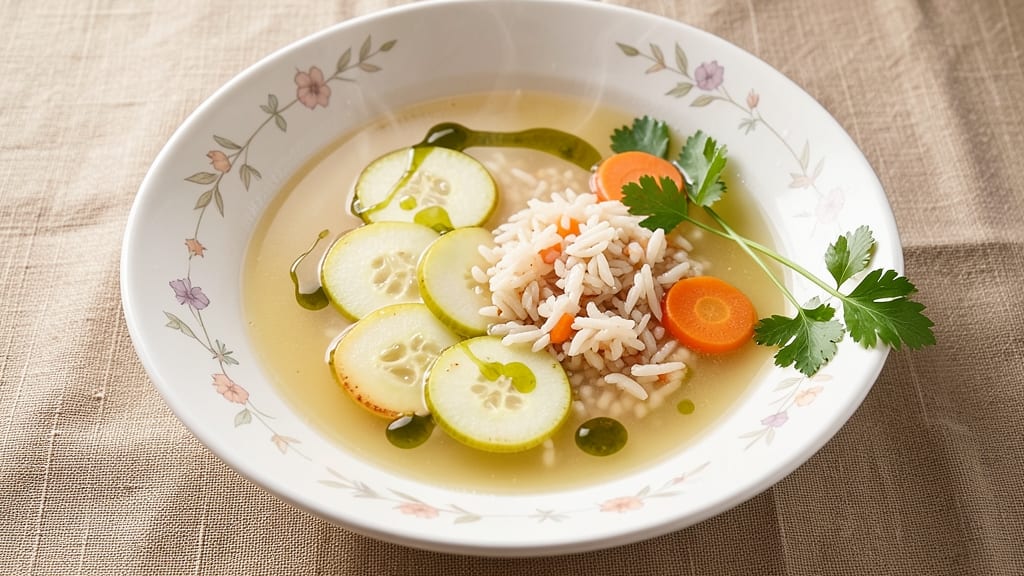
This clear soup recipe for diverticulitis is designed to soothe irritation while delivering gentle, easily digestible nutrition—no seeds, skins, or rough textures. The key lies in blending refined grains, well-cooked vegetables, and smooth broth into a velvety consistency that supports healing without aggravating symptoms.
Every ingredient is chosen for its soft texture and low-fiber profile, ensuring comfort with every spoonful.
The foundation starts with a slow-simmered broth (chicken or vegetable) that extracts maximum flavor while remaining gentle on digestion. Refined rice or well-cooked carrots and zucchini provide natural thickening without fiber, while a touch of olive oil adds healthy fat for satiety.
The soup’s simplicity isn’t just practical—it’s intentional, focusing on what your body can tolerate during flare-ups.
By the time it’s done, you’ll have a silky, warm soup that’s easy on the stomach but packed with nourishing elements. The absence of irritants means no discomfort, while the balanced flavors make it satisfying enough to eat regularly.
This isn’t just a meal; it’s a step toward gentle recovery, designed to fit seamlessly into a diverticulitis-friendly diet.
Optional garnishes like a sprinkle of fresh parsley (finely chopped) or a drizzle of lemon juice can add brightness without risk—just ensure they’re strain-free. The recipe scales effortlessly, so you can make a single serving or a batch for the week. Here’s how to prepare it with care and precision.
Ingredients for clear soup recipe for diverticulitis
Eleven simple ingredients blend into a velvety, healing soup designed for sensitive digestion.
| Ingredient | Amount | Notes |
|---|---|---|
| Chicken Broth 🍲 | 4 cups | Low-sodium, homemade preferred |
| White Rice 🍚 | ½ cup | Long-grain, well-cooked to softness |
| Carrots 🥕 | 1 medium | Peeled, sliced into thin rounds |
| Zucchini 🥒 | 1 medium | Peeled, sliced into thin rounds |
| Extra-Virgin Olive Oil 🫒 | 1 tbsp | For satiety and healthy fat |
| Low-Sodium Chicken Bouillon 🍲 | 1 cube | Dissolved in broth for depth |
| Salt 🧂 | ¼ tsp | Diamond Crystal preferred |
| Black Pepper 🌶️ | ⅛ tsp | Freshly ground for flavor |
| Fresh Parsley 🌿 | ⅛ cup | Finely chopped, optional garnish |
| Lemon Juice 🍋 | ½ tsp | Freshly squeezed, optional |
| Vegetable Oil 🫒 | 1 tsp | For cooking rice if needed |
The broth forms the foundation—homemade is ideal, but Knudsen or Pacific Foods low-sodium cubes work well in a pinch. For the vegetables, organic carrots and zucchini from the produce section ensure no rough skins or seeds remain. If using store-bought broth, check labels for hidden additives like garlic or onion powder, which may irritate. The rice should soften completely; jasmine or basmati varieties cook evenly without excess starch. For extra flavor depth, toast a pinch of fennel seeds in the oil before adding broth, then strain them out.
No fresh parsley? Dried parsley at one-third the amount adds subtle brightness, though fresh is preferred for garnish. Substitute zucchini with well-cooked butternut squash if needed, but avoid skins. The olive oil is non-negotiable for healthy fats—extra-virgin has the best flavor and anti-inflammatory properties. For a vegetarian version, replace chicken broth with vegetable broth and an extra bouillon cube. Always strain all ingredients to eliminate any potential irritants, no matter how small.
Store broth and cooked vegetables separately in airtight containers for up to 5 days in the fridge. The rice reheats best when combined with fresh broth—never dried out. Freeze portions in 1-cup ice cube trays for easy single-serving reheats. This soup reheats beautifully; simmer gently to preserve its silky texture. For meal prep, assemble the full recipe and refrigerate for 4 days or freeze for 3 months. Always reheat to a rolling boil before serving.
Why You'll Love This Recipe
- No-Chop Needed: I swear by this—just slice those carrots into coins (no dicing, no fuss) and halve the zucchini lengthwise. The broth does all the work while you sip your coffee, and honestly? That’s my kind of cooking.
- Savory Simplicity Wins: The olive oil swirled into warm broth? Pure magic. It rounds out the chicken base without overpowering, and the rice softens just enough to soak up every last drop—like a hug in a bowl.
- Lunch for Days: Make a big batch on Sunday, and you’ve got breakfast, lunch, or dinner covered. The rice stays fluffy even reheated, and I’ve sent leftovers to work with me (no one questions the Tupperware).
- Gentle on Wallet: A single bag of rice and a carrot-zucchini haul from the produce section stretch this recipe for a week. Between us, it’s the only soup where I actually want leftovers—because it’s that good.
Step-by-step instructions for gentle healing clear soup
This method ensures a perfectly balanced, easy-to-digest soup tailored for sensitive digestion.
Prepare the Base Ingredients
Begin by peeling and slicing the 1 medium carrot and 1 medium zucchini into thin, even rounds—about ¼-inch thick. Uniform slices ensure even cooking and gentle texture. Place them in a medium bowl and set aside.
In a separate small bowl, combine the 0.5 cup white rice with 4 cups chicken broth and the dissolved 1 cube low-sodium chicken bouillon. Stir gently to fully integrate the bouillon crystals. This creates a flavorful base while maintaining digestive ease through the low-sodium approach.
Cook the Vegetables and Rice
Heat 1 teaspoon vegetable oil in a medium saucepan over medium heat. Add the sliced vegetables and sauté for 3-4 minutes until they begin to soften slightly but remain vibrant. This light cooking preserves their nutrients while preparing them for the broth.
Add the rice-broth mixture to the pan, stirring once to combine. Bring to a gentle simmer, then reduce heat to low. Cover and cook for 20-25 minutes, stirring occasionally, until the rice is fully tender and the vegetables are easily pierced with a fork. The soup should have a velvety consistency with no gritty texture.
Season and Finish
Remove the pan from heat and stir in the 1 tablespoon extra-virgin olive oil, 0.25 teaspoon salt, and 0.125 teaspoon black pepper. The olive oil adds satiety and healthy fats, while the minimal seasoning ensures the soup remains gentle on digestion. Let the soup rest for 5 minutes to allow flavors to meld.
Before serving, stir in the 0.125 cup fresh parsley and 0.5 teaspoon lemon juice. The parsley adds freshness and visual appeal, while the lemon juice brightens the flavors without adding acidity. Taste and adjust seasoning if needed, keeping in mind the soup should remain mild and easily digestible.
Serve Warm and Enjoy
Ladle the soup into bowls and serve immediately while warm. The texture should be smooth and comforting, with no chunks that could irritate sensitive digestive systems. Each spoonful should be gentle yet flavorful, providing nourishment without strain.
This soup is designed to be both healing and satisfying, making it ideal for those managing diverticulitis. The combination of easily digestible rice, soft-cooked vegetables, and balanced seasoning ensures it supports recovery while delivering comfort.
Pro Tips For Making Clear Soup Recipe For Diverticulitis
- Simmer Low and Slow: Chicken broth for diverticulitis needs patience—bring it to a gentle boil first, then drop the heat until tiny bubbles just break the surface. I used to rush it, and the broth turned cloudy from starch or overcooked veggies. Keep it at 180°F (82°C) or lower, or you’ll end up with a murky mess instead of a clear, soothing broth.
- Peel and Dice Carrots Small: Cut carrots into ¼-inch pieces—no bigger, no smaller. Big chunks stay tough and turn to mush; tiny pieces dissolve into mush. My grandmother swore by this: "Small dice means small work for your gut, big flavor for your spoon." Use the tip of a knife to score the bottom of each piece for even cooking.
- Strain Twice for Clarity: After simmering, strain the broth through a fine-mesh sieve once, then pour it through a coffee filter or cheesecloth for a second pass. I learned this the hard way—skipping the second strain left fine rice starch and veggie bits floating. It’s tedious, but the result is a broth so clear it looks like water you’d drink, not soup you’d strain.
- Toast Rice Before Adding: Dry the white rice in a skillet with olive oil over medium heat for 2–3 minutes until it smells nutty. This removes excess starch so it doesn’t turn your soup gluey. I was skeptical until I tried it—now my rice stays distinct and the broth stays light, which is everything for a diverticulitis-friendly dish.
Storing and reheating this clear soup recipe for diverticulitis
Refrigerator Storage
Store your clear soup in an airtight glass container for up to 4 days in the refrigerator. I recommend using glass Pyrex containers with snap-on lids—they’re non-reactive and preserve flavor better than plastic.
Let the soup cool completely before storing to prevent condensation, which can dilute flavors and promote bacterial growth. Always refrigerate within 2 hours of cooking to maintain safety and freshness. ❄️
Freezer-Friendly Tips
Freeze portions in 1-cup ice cube trays for single-serving convenience. Once frozen, transfer cubes to a ziplock freezer bag with all air removed to prevent freezer burn. Label with the date—this soup stays fresh for 3 months in the freezer.
When reheating frozen portions, add an extra ½ cup broth to restore its velvety texture. Never freeze with garnishes like parsley or lemon juice, as they can become watery when thawed.
Reheating for Perfection
For stovetop reheating, transfer soup to a saucepan over medium-low heat. Add ¼ cup broth to prevent sticking and maintain consistency. Bring to a gentle simmer (not boiling) for 5-7 minutes, stirring occasionally.
This method preserves the soup’s delicate texture better than microwaving. If the soup appears too thick after reheating, stir in a splash of warm broth to restore its smoothness. 🔥
Microwave Shortcuts
For quick reheating, transfer soup to a microwave-safe bowl and cover with a microwave-safe lid or damp paper towel. Heat on 50% power in 1-minute intervals, stirring between each interval, until reaching 165°F.
Avoid full power to prevent scorching the bottom. If the soup separates, whisk vigorously to re-emulsify before serving. This method works best for single servings and is ideal for busy days when time is limited.
Garnish After Reheating
Always add fresh garnishes like parsley or lemon juice after reheating to maintain their vibrant flavor and texture. Store garnishes separately in the fridge and add them just before serving. For extra richness, drizzle with 1 teaspoon olive oil after reheating—this enhances satiety without adding fiber.
Avoid pre-mixing garnishes into the soup during storage, as they can lose texture and flavor over time. ✨
Nutrition facts
Frequently asked questions
Can I use other vegetables besides carrots and zucchini?
Stick to low-fiber, skinless vegetables like well-cooked butternut squash (peeled) or potatoes (peeled and cubed). Avoid cruciferous veggies (broccoli, cauliflower) or corn, as they contain small seeds or tough fibers that can irritate. Always peel and slice ingredients into thin, even pieces for optimal digestion.
How do I make this soup vegetarian?
Replace the chicken broth with vegetable broth and add an extra low-sodium vegetable bouillon cube for depth. For protein, stir in ½ cup cooked white beans (cannellini or great northern), mashed until smooth, or use silken tofu (finely blended). Ensure all ingredients are strain-free to avoid fiber or skins.
Why does my soup turn out too thick?
This usually happens if the rice overcooks or absorbs too much broth. To fix it, stir in ¼ cup warm broth at a time until you reach a silky, ladle-friendly consistency. For prevention, use less rice (¼ cup instead of ½ cup) or simmer uncovered for the last 5 minutes to evaporate excess liquid.
Can I add herbs or spices beyond parsley and pepper?
Stick to mild, seed-free herbs like finely chopped cilantro or basil (added after reheating). Avoid whole spices (like bay leaves or peppercorns) or seeds (fennel, cumin) that could irritate. A pinch of turmeric or ginger (finely grated) adds flavor without risk—just strain out any fibrous bits.
Is this soup safe during a diverticulitis flare-up?
Yes, this recipe is designed specifically for flare-ups! It avoids all seeds, skins, and high-fiber ingredients, and the low-sodium broth reduces bloating. The refined rice and well-cooked vegetables provide easy-to-digest carbs and nutrients without straining your digestive system. Always consult your doctor for personalized dietary advice.