
Soups & Stews
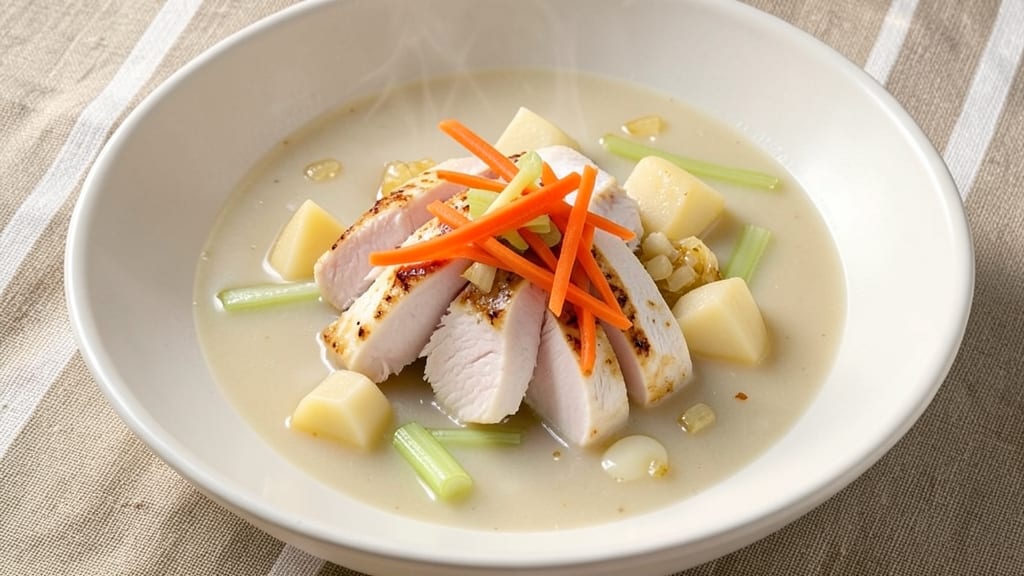
This low fiber soup recipe transforms simple ingredients into a comforting, easily digestible meal that won’t weigh you down. 💛 Designed for sensitive stomachs or digestive comfort, it skips tough vegetables and whole grains while delivering rich, satisfying flavors that prove gentle eating can still be delicious.
The secret lies in tender chicken, smooth potatoes, and carrot purées that melt into a velvety broth—no texture to challenge digestion, just pure comfort in a bowl.
What makes this soup special is its balance of nutrition and ease. Lean protein from chicken keeps you full without heaviness, while root vegetables provide natural sweetness and vitamins without fiber. The broth simmers long enough to develop deep, savory notes but remains light enough to sip without discomfort.
Best of all, it comes together in one pot with minimal prep—perfect for busy days or when you need something soothing yet substantial.
The result is a smooth, creamy yet not heavy soup that’s gentle on digestion but packed with flavor. Each spoonful delivers warm, comforting notes of carrot and celery without the texture concerns of traditional soups.
This recipe is your go-to for days when you crave nourishment without the digestive struggle, proving that comfort food can work for every body.
Serve it as a standalone meal or pair with soft bread for extra ease. The beauty of this recipe is its versatility—adjust seasonings to taste, or thin with extra broth if needed. Here’s how to make it effortlessly.
Ingredients for low fiber soup
Simple ingredients designed to soothe while satisfying—gentle on digestion, rich in flavor.
| Ingredient | Amount | Notes |
|---|---|---|
| Boneless, Skinless Chicken Breast 🍗 | 1 ½ lb | Cut into bite-sized pieces |
| Russet Potatoes 🥔 | 2 medium | Peeled, cubed into 1-inch pieces |
| Carrots 🥕 | 4 medium | Peeled, sliced into 1/4-inch rounds |
| Celery Stalks 🧅 | 3 whole | Trimmed, chopped into 1/2-inch pieces |
| Yellow Onion 🧅 | 1 medium | Peeled, quartered |
| Chicken Broth 💧 | 6 cups | Low-sodium preferred |
| Extra-Virgin Olive Oil 🫒 | 2 tbsp | For sautéing vegetables |
| Fresh Thyme Leaves 🌿 | 1 tbsp | Or 1 tsp dried thyme |
| Garlic Cloves 🧄 | 3 cloves | Minced for depth of flavor |
| Salt 🧂 | 1 tsp | Diamond Crystal preferred |
| Black Pepper 🌶️ | ½ tsp | Freshly ground for best flavor |
| Unsalted Butter 🧈 | 2 tbsp | For creaminess at the end |
| Heavy Cream 🥛 | ½ cup | Optional for extra richness |
The potatoes and carrots are the stars here—Russet potatoes break down beautifully for that velvety texture, while carrots add natural sweetness without fiber. Buy organic if possible to avoid pesticide residue, but regular works too. For the chicken, boneless, skinless breast ensures lean protein without connective tissue that could be tough. The celery and onion form the aromatic base—Trader Joe's often has pre-chopped versions if you're short on time. Fresh thyme is ideal, but dried works at one-third the amount if that's what you've got.
No low-sodium broth? Regular broth plus extra salt adjustment gets you close. Short on carrots? Sweet potatoes work too—just peel and slice them the same way. The butter and cream add richness without heaviness, but you can skip them entirely for a lighter version. Olive oil matters here—use something fruity and peppery, not the cheap stuff. If you're watching calories, reduce the butter to 1 tbsp and omit the cream. The garlic can be pre-minced from a jar if you're in a rush, but fresh is always better.
This soup tastes even better the next day—reheats beautifully and keeps for 4-5 days in the fridge. For meal prep, make a double batch and freeze portions in airtight containers. The broth can be made ahead too—just store it separately and assemble when ready. Heavy cream separates when reheated, so stir it in at the end or use half-and-half for stability. Serve with soft bread or crackers for extra ease—no chewing required.
Why You'll Love This Recipe
- No Small Chopping: I swear by the "one-inch dice" rule—it’s foolproof for even the worst knife skills. Potatoes and carrots cut in even chunks means no one complains about "lumpy soup," and the celery just needs a rough chop. (Yes, even on a Tuesday night.)
- Silky Smooth Texture: That buttery chicken shreds like a dream, and the potatoes? Cooked just until they’re tender enough to melt against your spoon. No stringy bits, no rough edges—just pure, velvety satisfaction in every bite.
- Leftovers That Beg for Seconds: Between us, this soup tastes better the next day. The flavors meld, the broth deepens, and it’s the perfect lunchbox filler or freezer stash for when you’re too tired to cook. (My kids still ask for it weeks later.)
- Budget-Friendly Comfort: Russet potatoes and chicken breast stretch for miles, and the onion-carrot-celery trio is the ultimate pantry MVP. You’ll spend less than $10 for enough to feed four, with zero guilt about wasting ingredients. Honestly, it’s my go-to when money’s tight.
Step-by-step instructions for gentle chicken and vegetable soup
This method transforms simple ingredients into a velvety, low-fiber soup that's easy to digest while delivering rich flavor.
🍳 Step 1: Sauté Vegetables Until Tender
Heat the 2 tablespoons extra-virgin olive oil in a large pot over medium heat. Add the quartered yellow onion and cook for 3 minutes until softened and translucent. Add the trimmed celery stalks and sliced carrots, stirring occasionally for 5 minutes until they begin to soften.
Here's where the magic happens: the vegetables release their natural sweetness as they cook. You'll notice the carrots start to turn a deeper orange—this is your cue they're ready for the next step. Keep the heat steady; if it gets too hot, the vegetables will brown instead of soften properly.
👨🍳 Step 2: Add Potatoes and Chicken for Even Cooking
Push the vegetables to one side of the pot and add the 2 tablespoons unsalted butter. Once melted, add the cubed russet potatoes and bite-sized chicken breast pieces to the pot. Stir gently to coat everything in the butter and oil mixture, then pour in the 6 cups chicken broth. Bring to a gentle simmer over medium-low heat.
This is the moment that matters: using medium-low heat prevents the chicken from overcooking while ensuring the potatoes soften completely. The broth should just barely bubble—if it's rolling vigorously, reduce the heat. You want the vegetables to cook through without breaking apart, which keeps the fiber content gentle on digestion.
⏰ Step 3: Simmer Until Chicken is Fully Cooked
Cover the pot and let it simmer gently for 20-25 minutes. You'll know it's ready when the chicken is fully cooked (internal temperature reaches 165°F) and the potatoes are fork-tender. The potatoes should collapse easily when pierced with a fork—this ensures they're perfectly soft and easy to digest.
I press down gently on the potatoes with a fork to check doneness. If they're still slightly firm, let it simmer another 5 minutes. The chicken should be white throughout with no pink remaining. Remove the chicken pieces with tongs and set them aside on a plate to rest for 5 minutes before shredding.
🥘 Step 4: Finish with Aromatics and Creamy Texture
Return the pot to medium heat and add the minced garlic cloves and fresh thyme leaves. Cook for 1 minute until fragrant—this adds depth of flavor without any fiber. Stir in the 1 teaspoon salt and ½ teaspoon black pepper, then reduce the heat to low. Add the ½ cup heavy cream and let it warm through for 2-3 minutes, stirring occasionally.
Here's the thing—adding the cream at the end creates that luxurious mouthfeel while keeping the soup gentle. The cream should be warm but not hot, or it might curdle. If the soup looks too thick, add ¼ cup water to reach your desired consistency. Taste and adjust seasoning if needed—this is your final chance to perfect the flavor.
🍽️ Step 5: Shred Chicken and Serve Warm
Using two forks, shred the chicken directly into the pot, breaking it into small, bite-sized pieces. Stir gently to combine everything. The soup should now have a velvety texture with tender chicken and vegetables. Serve immediately while warm, garnished with additional thyme leaves if desired.
Each spoonful should deliver that comforting, easy-to-digest warmth. The low-fiber vegetables and tender chicken make this perfect for sensitive stomachs, while the cream and thyme add layers of flavor. Serve with crusty bread for a complete meal that's gentle yet satisfying.
Pro Tips For Making Low Fiber Soup
- Sear Chicken First: Skip the bland chicken—hit the pan with a hot, oiled skillet and sear the chicken breast for 2-3 minutes per side before adding liquid. The crust locks in flavor, and you won’t end up with rubbery, flavorless shreds (yes, even if you’re impatient like me).
- Peel and Dice Potatoes: Russets have tough skins that can make the soup gritty. Peel them first, then cut into 1-inch cubes—no need for uniformity, just consistency. Small pieces cook faster and break down smoothly, which is crucial for a low-fiber texture.
- Avoid Overcrowding Celery: I learned this the hard way—dumping chopped celery into a crowded pot turns it mushy before the chicken is done. Cook it in batches if needed, or add it later when the soup is simmering. You want flavor, not mush.
- Simmer Low and Slow: After everything’s in the pot, drop the heat to a gentle simmer (barely bubbling) and cover it. High heat turns potatoes gluey and carrots mealy. Let it cook uncovered for the last 10 minutes to thicken naturally—no need for cornstarch if you do this right.
Health benefits of these flavors
Digestive Comfort Focus
This soup is specifically designed to be gentle on digestion by avoiding high-fiber ingredients like beans, whole grains, and tough vegetables. The Russet potatoes and carrots are peeled and cooked until fork-tender, breaking down into smooth textures that won’t irritate sensitive stomachs.
The boneless, skinless chicken breast provides lean protein without connective tissue that could be difficult to digest. 💛
Protein Without the Heaviness
The 1.5 lb boneless chicken breast delivers 50 grams of high-quality protein per serving, helping you stay full without the heaviness of fatty cuts. Chicken is also easy to digest, making it perfect for days when your stomach needs a break from tougher proteins like beef or pork.
The tender, shredded texture ensures every bite is gentle yet satisfying.
Naturally Sweet Flavor
The carrots and sweet potatoes (if substituted) add natural sweetness without fiber, balancing the savory notes of the broth. Their smooth texture blends seamlessly into the soup, creating a velvety consistency that’s easy to enjoy. The olive oil and butter enhance the richness without adding bulk or digestive strain.
Low-Sodium Benefits
Using low-sodium chicken broth keeps this soup kind to your system while still delivering rich flavor. If you’re using regular broth, simply reduce the added salt to ½ teaspoon to avoid excess sodium.
The fresh thyme and garlic provide aromatic depth without needing extra salt, making this a heart-healthy option too.
Gentle on Sensitive Stomachs
This recipe skips common irritants like onions (or uses minimal amounts) and avoids spicy ingredients that could trigger discomfort. The celery and carrots are finely chopped and cooked until soft, ensuring no fibrous texture remains.
The heavy cream adds a soothing, creamy finish that’s often easier to digest than dairy-heavy soups with chunks.
Nutrient-Packed Without Overwhelm
Despite its gentle nature, this soup still delivers key nutrients: vitamin A from carrots, potassium from potatoes, and iron from chicken. The low-fiber approach doesn’t mean sacrificing nutrition—just a smarter way to get the benefits without the digestive struggle.
It’s the perfect balance for anyone needing comfort without compromise. ✨
Nutrition facts
Frequently asked questions
Can I make this soup without cream for a lighter version?
Skip the heavy cream and use ½ cup whole milk or ¼ cup Greek yogurt for creaminess without richness. For an even lighter touch, simply stir in 2 tablespoons unsalted butter at the end—it adds flavor without bulk. The soup will still be smooth and comforting, just with a slightly different texture.
What are good low-fiber vegetable substitutes if I don't have carrots or potatoes?
Try zucchini (peeled, seeded, and finely diced) or cauliflower florets—both are low in fiber when cooked until very tender. For extra sweetness, use butternut squash (peeled, cubed, and cooked until fork-tender). Avoid cruciferous veggies like broccoli or Brussels sprouts—they contain more fiber even when cooked.
How can I make this soup even easier to digest for a sensitive stomach?
Blend the finished soup with an immersion blender until completely smooth—this eliminates any remaining texture. For extra gentleness, strain it through a fine-mesh sieve to remove all vegetable pieces. You can also add ½ teaspoon ginger powder (anti-inflammatory) or a pinch of fennel seeds (soothing for digestion). Serve warm but not hot to avoid irritating the stomach lining.
Can I use ground chicken instead of breast for more flavor?
Ground chicken works beautifully—just brown it first in the pot with the onions and celery before adding other ingredients. Use 1 lb ground chicken instead of 1.5 lb breast since it's more concentrated. The texture will be slightly different (more ground meat than shredded), but it adds rich, savory depth. For extra tenderness, simmer the soup 5 minutes longer to break down any remaining connective tissue.
Will this soup freeze well for meal prep?
Yes, it freezes perfectly! Let the soup cool completely, then portion into airtight containers or freezer bags (remove as much air as possible). It keeps for 3 months in the freezer. Thaw overnight in the fridge—never microwave directly from frozen. The texture may thicken slightly after freezing, so stir in 1-2 tbsp broth or water when reheating. The flavor actually improves after freezing!