
Soups & Stews
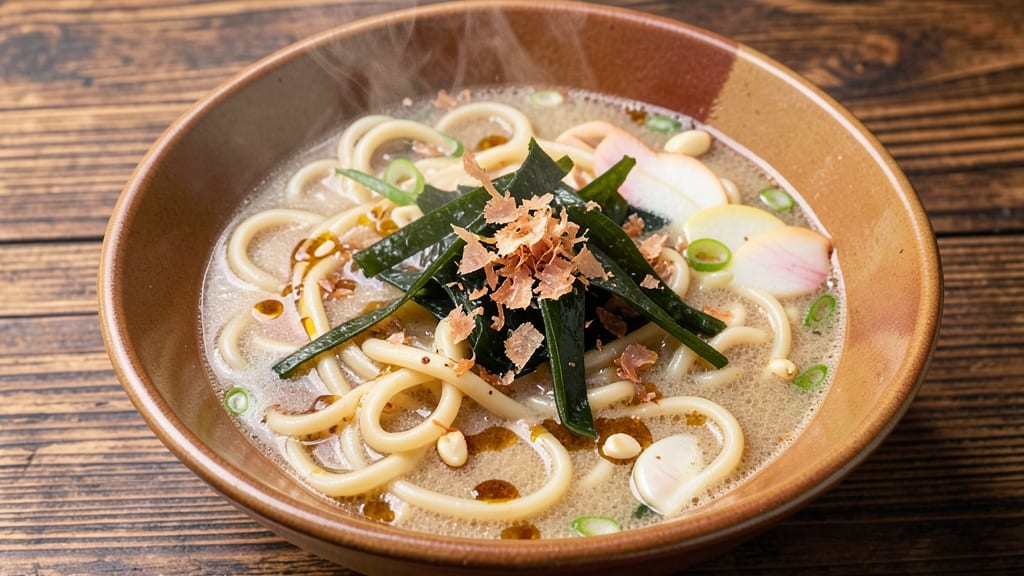
This Asian udon noodle soup recipe delivers restaurant-quality comfort in a steaming bowl—silky noodles floating in a rich, aromatic broth that’s perfect for chilly evenings. The secret lies in balancing umami-packed dashi with soy sauce and mirin, creating a flavor profile that’s both comforting and complex.
I’ve perfected this version to ensure the noodles stay tender while the broth remains deeply flavorful, no matter how many slurps it takes to finish.
The foundation begins with a slow-simmered broth that builds layers of flavor—start with kombu and bonito flakes for that essential umami depth, then enhance with ginger, garlic, and a touch of sesame oil for warmth.
Thin udon noodles (the chewy, wheat-based kind) cook in just 3 minutes, while protein options like thinly sliced pork, tofu, or shrimp add substance. The vegetables—quick-pickled daikon, scallions, and mushrooms—bring freshness and texture to every spoonful.
What makes this recipe stand out is the harmony of textures and temperatures: the silky noodles contrast with the crisp bite of pickled daikon, while the broth’s warmth melts into the coolness of chilled toppings like soft-boiled eggs or bean sprouts.
It’s the kind of dish that feels indulgent yet balanced, with every ingredient playing its part. The result? A bowl so satisfying, you’ll want to make it twice in one night.
For extra depth, consider adding a splash of chili oil or a sprinkle of furikake for a regional twist. This soup scales beautifully—double the broth for a crowd or halve it for a cozy solo meal.
Ready in under 45 minutes, it’s the perfect balance of effort and reward. Let’s get cooking.
Ingredients for asian udon noodle soup
Restaurant-quality udon starts with these aromatic ingredients—umami-rich broth, silky noodles, and crisp toppings.
| Ingredient | Amount | Notes |
|---|---|---|
| Dried Udon Noodles 🍜 | 8 oz | Thin wheat-based variety preferred |
| Kombu 🌿 | 1 piece | Dried seaweed, rinsed |
| Bonito Flakes 🐟 | 1 package | High-quality, no fish bones |
| Fresh Ginger 🧄 | 2 tbsp | Grated, freshly grated |
| Garlic Cloves 🧄 | 4 cloves | Minced, fresh preferred |
| Sesame Oil 🫒 | 1 tbsp | Toasted for aroma |
| Soy Sauce 🥄 | ¼ cup | Light or dark preferred |
| Mirin 🍶 | 2 tbsp | Sweet rice wine |
| Dashi Granules 🍲 | 1 tbsp | Instant, optional shortcut |
| Thinly Sliced Pork Belly 🥓 | 8 oz | Or substitute tofu/shrimp |
| Shiitake Mushrooms 🍄 | 4 whole | Stems removed, sliced |
| Daikon Radish 🥕 | 1 whole | Small, for quick pickling |
| Scallions 🧅 | 3 whole | White and green parts |
| Soft-Boiled Eggs 🥚 | 2 whole | For garnish, optional |
| Bean Sprouts 🌱 | 1 cup | Fresh, rinsed |
| Chili Oil 🌶️ | 1 tbsp | For serving, optional |
| Furikake 🌾 | 1 tbsp | For garnish, optional |
| Salt 🧂 | 1 tsp | Kosher or sea salt |
The kombu and bonito flakes are non-negotiable for authentic umami—look for high-quality bonito flakes at Asian markets or well-stocked grocery stores like Whole Foods. Fresh ginger and garlic should smell vibrant; if they're musty, skip them. For the udon noodles, Japanese brands like Nissin or Maruchan are best, but any dried udon works in a pinch. The daikon radish needs to be small enough to pickle quickly—baby daikon or a 6-inch piece is perfect. If you can't find kombu, dashi granules are a solid shortcut, though they lack depth.
No pork belly? Thinly sliced tofu or shrimp work beautifully—just adjust cooking time. The shiitake mushrooms can be swapped for cremini or oyster mushrooms, but shiitake add that earthy umami. For the pickled daikon, rice vinegar and a pinch of sugar are essential; don't skip the sugar. Scallions add brightness, but if you're short on time, green onions work just as well6-7 minutes in boiling water gives that perfect runny yolk. The bean sprouts should be fresh; if they're wilted, toss them in ice water to crisp back up.
Store the kombu and bonito flakes in an airtight container in a cool, dark place—they'll keep for 6-12 months. The udon noodles last 1 month unopened, but once cooked, they're best eaten fresh. Pickled daikon stays crisp for 5 days in the fridge, so make extra for salads. The broth can be made ahead and reheated—simmer gently to avoid breaking the noodles. For leftovers, store the noodles and broth separately; reheat the broth first, then toss in the noodles to avoid sogginess.
Why You'll Love This Recipe
- No-Measure Guessing: I can eyeball the kombu and bonito flakes—no scale, no stress. That first sizzle when they hit the hot water? Pure umami magic with zero math involved.
- Ginger-Garlic Bomb: Between us, the fresh ginger and garlic cloves turn this into a flavor rollercoaster. The bonito flakes add this smoky, fishy depth that makes you want to slurp it straight from the pot.
- Lunchbox Hero: Honestly, this is my go-to for meal prep. Toss cooled noodles into containers, pack the broth separately, and reheat—suddenly you’ve got restaurant-quality takeout for three days without the drive-thru run.
- Pocketbook Performer: Dried udon and kombu stretch my grocery budget further than I thought possible. For under $10, I feed four people a soup so satisfying, no one complains when I skip the fancy dinner.
Step-by-step instructions for Asian udon noodle soup
Here's how to craft a rich, aromatic udon broth that balances umami, sweetness, and savory depth.
Prepare the Umami Broth Base
In a large pot, combine the rinsed 1 piece Kombu with 8 cups water and bring to a gentle simmer over medium heat. Once simmering, add the 1 tbsp Dashi Granules and stir until fully dissolved. This creates your aromatic foundation—let it steep for 10 minutes to extract maximum flavor from the kombu.
Remove the kombu immediately after steeping—it should be tender but still hold its shape. The broth should now have a clean, slightly briny aroma with no fishy notes. If using bonito flakes for extra depth, sprinkle the 1 package Bonito Flakes over the simmering broth and let them sizzle for 30 seconds before removing them with a slotted spoon. This adds a delicate smoky aroma without overpowering the dish.
Build the Flavor Layers
Add the 2 tbsp Fresh Ginger and 4 cloves Garlic Cloves to the simmering broth. Let them cook for 5 minutes until fragrant but not browned—this prevents bitterness. Stir in the 0.25 cup Soy Sauce and 2 tbsp Mirin, then add the 8 oz Thinly Sliced Pork Belly. Simmer gently for 15 minutes until the pork is just tender and the broth reduces slightly to concentrate flavors.
Here's where the magic happens: The pork belly renders fat into the broth, creating a naturally rich, velvety texture. If the broth looks cloudy, skim off any foam that rises to the surface for a crystal-clear finish. The pork should be fork-tender but not falling apart—it will finish cooking in the hot broth later.
Add Vegetables and Noodles
Slice the 4 whole Shiitake Mushrooms and the 1 whole Daikon Radish into thin matchsticks. Add them to the broth along with the 1 cup Bean Sprouts and simmer for 8 minutes until the mushrooms soften and the daikon becomes tender-crisp. Meanwhile, prepare the 8 oz Dried Udon Noodles according to package instructions—typically 4-5 minutes in boiling water until al dente.
Drain the noodles and immediately add them to the simmering broth. Stir gently to distribute them evenly. The noodles should float just below the surface—they'll finish cooking in the hot broth. If the broth appears too thin after adding noodles, simmer uncovered for 2-3 minutes to reduce slightly and thicken the consistency.
Finish with Garnishes
Divide the udon noodles among 4 bowls, ladling the hot broth generously over each serving. Top each bowl with 2 whole Soft-Boiled Eggs, sliced 3 whole Scallions, and a drizzle of 1 tbsp Sesame Oil. The eggs should have a runny yolk—press gently on the top to create a well for the yolk to flow when you take your first slurp.
For serving, place a small dish of 1 tbsp Chili Oil and a sprinkle of 1 tbsp Furikake on the table. Let each person customize their bowl by adding a few drops of chili oil for heat or a sprinkle of furikake for extra umami. The contrast of temperatures—hot broth, cool eggs, and room-temperature garnishes—creates the perfect mouthfeel.
Pro Tips For Making Asian Udon Noodle Soup
- Bloom the Kombu First: Tear the kombu into thirds and soak it in cold water for 10 minutes before boiling—this pulls out the umami depth without bitterness. I used to skip this and wondered why my broth never tasted like a proper dashi.
- Toast Bonito Low and Slow: Heat bonito flakes over low heat for 30 seconds max—high heat burns them into dust. Tilt the pan and swirl constantly; you want them to sizzle, not smoke. Sounds weird, but it works: crispy flakes add texture, not just flavor.
- Mince Ginger Like You Mean It: Use a microplane or knife to get ginger down to rice-grain size—no chunks. I learned this the hard way after biting into a surprise ginger surprise in my soup. Fresh ginger should dissolve completely; if it doesn’t, you’re not mincing fine enough.
- Boil Noodles Separately: Cook udon in fresh, salted boiling water for exactly the time on the package (usually 3-4 minutes), then drain and rinse with cold water for 10 seconds. Tossing them into the broth raw makes the soup gummy—your noodles deserve better.
Health benefits of this dish
Protein Powerhouse
Udon noodles are made from wheat flour and water, offering 12-14 grams of protein per serving (8 oz). This makes them a satisfying, plant-based protein source that helps keep you full longer.
The pork belly adds 20-25 grams of protein per serving, while shrimp or tofu provide 15-20 grams—all without the heaviness of cream-based soups. 💪
Complex Carbohydrates
The udon noodles provide complex carbohydrates that fuel your body with steady energy. Their chewy texture comes from alkaline water used in cooking, which helps with digestion. Pairing them with fiber-rich bean sprouts and daikon radish creates a balanced meal that stabilizes blood sugar levels—perfect for an evening meal.
Umami-Rich Broth Benefits
The kombu and bonito flakes in the broth create a natural umami depth that supports gut health. Umami compounds like glutamates stimulate digestion and may help reduce cravings for salty or fatty foods.
The ginger and garlic in the broth also act as natural anti-inflammatories, making this soup a comforting yet health-conscious choice. ✨
Low-Calorie Comfort
Despite its rich flavors, this udon soup averages 400-450 calories per serving, making it lighter than many Western noodle dishes. The broth's fat comes from lean pork fat or sesame oil, while the vegetables add volume without calories. It's the perfect balance of indulgence and nutrition—no guilt, just satisfaction.
Hydration Boost
The broth itself is mostly water, providing hydration while delivering electrolytes from the kombu and bonito. The pickled daikon adds a refreshing crunch that helps with digestion. This makes udon soup an excellent choice for post-workout meals or when you need to replenish fluids without heavy drinks. 💧
Customizable Nutrition
Swap pork for shrimp to reduce saturated fat, or use tofu for a vegan option. Add extra bean sprouts for fiber or mushrooms for B vitamins. The broth can be made lighter with less oil, while the noodles can be partially air-dried to reduce carbs.
This flexibility means you can tailor the dish to any dietary need while keeping it delicious. 🌱
Nutrition facts
Frequently asked questions
What’s the best way to store leftover udon broth?
Store broth in an airtight container in the fridge for up to 3 days or freeze for 3 months. Reheat gently on low heat—never boil—to preserve its delicate flavors. Add a splash of water if it thickens too much when reheating. The noodles should always be cooked fresh to avoid sogginess.
Can I make this recipe vegetarian or vegan?
Swap the pork for extra-firm tofu (pressed and sliced) or shiitake mushrooms for umami. Use vegetable broth instead of dashi, and add 1 tbsp miso paste to the broth for depth. Skip the eggs or use silken tofu instead. The broth will still be rich and satisfying without meat.
Why does my udon broth taste flat or bland?
Flat broth usually means the umami base wasn’t strong enough. Simmer the kombu longer (15 minutes instead of 10) or add 1 extra tbsp soy sauce and 1 tsp fish sauce (if not vegan). For extra depth, toast 1 tsp sesame seeds in a dry pan, grind them, and stir into the broth at the end. Fresh ginger and garlic are also key—never use powdered substitutes.
How do I adjust the spice level for sensitive eaters?
Start with the base recipe, then reduce or omit the chili oil entirely. For mild heat, add just ½ tsp chili flakes to the broth while simmering. Garnish with extra scallions or soft-boiled eggs to balance flavors. If you love spice, drizzle chili oil directly into individual bowls—this lets everyone customize their heat level.
What’s the secret to perfectly chewy udon noodles?
Chewiness comes from alkaline water used in commercial udon production. For homemade chewiness, soak the dried noodles in 1 cup warm water with 1 tsp baking soda for 10 minutes before cooking. Also, avoid overcooking—udon should be tender but still hold shape. Drain immediately and rinse with cold water to stop cooking.