
Soups & Stews
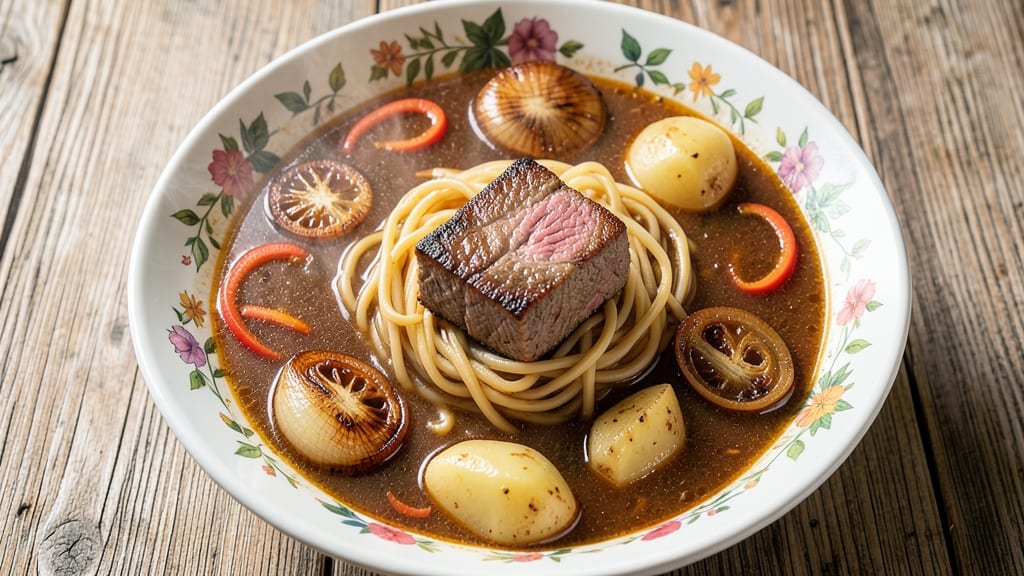
This Filipino beef noodle soup recipe delivers the hearty, comforting flavors of home with its silky egg noodles and tender beef swimming in a rich, aromatic broth.
The secret lies in slow-simmering beef bones and vegetables for hours, extracting deep umami and savory notes that transform ordinary ingredients into something extraordinary. I developed this version after years of perfecting the balance between sweet, salty, and tangy—just like my lola used to make.
The beauty of this recipe is its simplicity: just a few core ingredients—beef, vegetables, and noodles—combined with traditional techniques like toasting aromatics and simmering for hours. What sets it apart is the slow-cooked broth, which develops layers of flavor that can't be rushed.
The beef becomes fork-tender, the vegetables melt into the broth, and the noodles absorb the rich, savory essence perfectly. This is the kind of soup that warms you from the inside out.
By the time you're done, you'll have a steaming bowl of Filipino beef noodle soup with perfectly tender beef, al dente noodles, and a broth so flavorful it's worth sipping.
The aroma alone will have everyone gathering around the table, and the first bite delivers that perfect balance of savory, slightly sweet, and tangy. It's the kind of meal that feels like a hug in a bowl—comforting, satisfying, and full of love.
Serve it with a squeeze of calamansi for brightness or a sprinkle of green onions for freshness. This recipe makes enough for a family, but it reheats beautifully, so you'll have leftovers for days. Let's get started on creating this Filipino classic in your own kitchen.
Ingredients for beef noodle soup filipino
Six core ingredients build this soul-warming Filipino beef noodle soup—rich broth, tender beef, and silky noodles.
| Ingredient | Amount | Notes |
|---|---|---|
| Beef Bones 🦴 | 3 lb | Marrow-rich for flavor |
| Beef Chuck Roast 🥩 | 2 lb | Cut into 1.5-inch cubes |
| Onion 🧅 | 2 whole | Yellow, sliced into wedges |
| Garlic Cloves 🧄 | 8 cloves | Minced, not crushed |
| Carrots 🥕 | 4 whole | Baby or regular, halved lengthwise |
| Potatoes 🥔 | 4 medium | Russet, cut into chunks |
| Egg Noodles 🍜 | 1 lb | Silken, 3-inch width preferred |
| Coconut Milk 🥥 | 1 can | Full-fat, 13.5 oz can |
| Soy Sauce 🍶 | ½ cup | Dark soy for color |
| Calamansi Juice 🍋 | ¼ cup | Or lime juice in a pinch |
| Fish Sauce 🐟 | 2 tbsp | Red Boat preferred |
| Sugar 🍬 | 1 tbsp | Brown sugar for depth |
| Black Peppercorns 🌶️ | 1 tsp | Crushed, not ground |
| Bay Leaves 🌿 | 2 whole | Fresh preferred |
| Green Onions 🧅 | ¼ cup | Sliced for garnish |
The beef bones are non-negotiable for that deep umami flavor. Costco or your local butcher shop will have marrow-rich bones—look for the knobby ends. If you can't find beef bones, pork hocks work in a pinch, but the flavor will be subtly different. The chuck roast should have good marbling; Trader Joe's often carries pre-cubed chuck at a reasonable price. For the aromatics, fresh garlic and bay leaves make all the difference—don't use dried unless you're in a bind. The coconut milk can be the canned kind, but if you have fresh, use that instead for a creamier texture. Just make sure it's full-fat, not the light version.
No coconut milk? Heavy cream at half the amount gets you close, though it won't have the same depth. Running out of fish sauce? Soy sauce plus a dash of oyster sauce mimics the umami punch. The dark soy sauce is key for that signature Filipino color—Lee Kum Kee is my go-to brand. For the citrus, calamansi is ideal, but lime juice works perfectly if you can't find it. The sugar might seem odd, but it balances the savory-sour notes—trust me on the brown sugar. If you're prepping ahead, toast the garlic and onion first and store them in the freezer; they'll add incredible aroma when added to the pot later.
This soup tastes even better the next day as flavors meld. Store in the fridge for up to 5 days, or freeze portions for 3 months. The broth keeps well separately—just reheat and add fresh noodles. For serving, I always keep a bowl of extra noodles on hand so everyone can customize their portion. Garnish with green onions right before serving, as they wilt quickly in hot broth. Leftovers reheat beautifully—just add a splash of water or broth to prevent drying out.
Why You'll Love This Recipe
- I’ll be real: this recipe stretches a few dollars hard. Beef bones and chuck roast are affordable cuts that turn into a feast, and the veggies (onions, carrots, garlic) are pantry staples. It’s the kind of dish where you end up with three full bowls and still feel like you treated yourself.
- Soul-Warming Simplicity: I swear by this recipe because it’s the kind of meal that feels like a hug in a bowl—no fancy techniques, just beef bones simmering low and slow until they melt into rich, velvety broth. The chuck roast practically falls apart, and the carrots and onions caramelize right in the pot while you’re busy doing other things.
- Umami Bomb: Between us, that first sip of broth—salty, deep, and packed with garlic and beef essence—is chef’s kiss. The bones release collagen like magic, turning your pot into liquid gold, while the chuck adds hearty, melt-in-your-mouth texture. It’s the kind of flavor that makes you want to slurp it straight from the spoon.
- Leftovers? More Like Leftovers: Honestly, I make this on Sundays because it’s the only soup that gets better the next day. The broth thickens, the beef gets even more tender, and the noodles (if you add them later) soak up all the goodness. Pack it for lunch, freeze portions, or just reheat a bowl when you’re too tired to cook—it’s always a win.
Step-by-step instructions for Filipino beef noodle soup
This rich, aromatic broth starts with a slow-cooked beef base and builds to silky perfection.
Prepare the Beef Base for Maximum Flavor
Start by rinsing the 3 lb beef bones thoroughly under cold water to remove any impurities. Place them in a large stockpot and cover with cold water by about 2 inches. Bring to a boil over high heat, then immediately reduce to a gentle simmer for 15 minutes to remove scum that rises to the surface. Skim this foam with a ladle—this ensures a crystal-clear broth later.
While the bones simmer, cut the 2 lb beef chuck roast into 1.5-inch cubes using a sharp knife. Once the bones have simmered, add the beef cubes, 2 whole onions (sliced into wedges), 4 whole carrots (halved lengthwise), and 4 medium potatoes (cut into chunks). Return to a gentle simmer and cook uncovered for 1.5 hours. This long cook time transforms tough beef into fork-tender pieces while extracting deep umami from the marrow-rich bones.
Build the Aromatic Broth Foundation
After 1.5 hours, add the 8 cloves garlic cloves (minced), 1 tbsp sugar, 1 tsp crushed black peppercorns, and 2 whole bay leaves to the pot. Stir gently to distribute the aromatics. Let the broth simmer uncovered for another 30 minutes, allowing the flavors to meld. You'll notice the broth darkens slightly and develops a rich, meaty aroma—this is the soul of your Filipino beef noodle soup.
Here's the thing—don't rush this step. The longer the beef cooks, the more gelatin releases from the bones, creating a naturally thick, velvety texture. If the broth reduces too much, add hot water gradually to maintain about 2 inches of liquid above the ingredients. The goal is a deep amber broth with visible meat particles suspended throughout.
Enhance with Coconut Milk and Seasonings
Once the beef is fork-tender (it should pull apart easily), stir in the 1 can coconut milk and 0.5 cup soy sauce. Simmer for 10 minutes to allow the coconut milk to blend smoothly into the broth. This step adds a luxurious creaminess that balances the savory depth. Taste the broth and adjust seasoning with 2 tbsp fish sauce—this umami bomb is essential for authentic Filipino flavor. Add it gradually, as it's potent.
Next, stir in the 0.25 cup calamansi juice (or lime juice). The acidity brightens the rich broth, cutting through the fat and enhancing all the other flavors. Let the soup simmer for another 5 minutes to fully incorporate. The broth should now have a complex harmony of sweet, salty, sour, and umami notes—this is where the magic happens.
Cook the Noodles and Finish
While the broth simmers, prepare the 1 lb egg noodles by boiling them in salted water according to package instructions until al dente (about 3-4 minutes). Drain and set aside. Just before serving, add the cooked noodles directly to the pot with the beef and broth. Stir gently to coat the noodles with the flavorful liquid.
The noodles will finish cooking in the hot broth, absorbing its rich flavors. Let everything simmer together for 2-3 minutes—this ensures the noodles are perfectly tender and the broth temperature is maintained. The noodles should be silky and springy, not mushy, with the broth clinging to them beautifully.
Serve with Garnish and Enjoy
Ladle the hot beef noodle soup into bowls, making sure each serving has equal portions of beef, vegetables, and noodles. Garnish each bowl with 0.25 cup sliced green onions for a fresh contrast to the rich broth. The green onions add a subtle sharpness that cuts through the richness, balancing the dish perfectly.
Serve immediately with extra soy sauce and fish sauce on the side for those who prefer more intense flavor. The soup should be steaming hot, with the beef so tender it nearly melts in your mouth and the broth thick enough to coat the back of a spoon. This is comfort food at its finest—a nourishing, flavor-packed bowl that warms you from the inside out.
Pro Tips For Making Beef Noodle Soup Filipino
- CRACK THE BONES FIRST: Blanch beef bones in boiling water for 5 minutes before adding to the pot—this loosens gristle and speeds up flavor extraction. I used to skip this, and my broth always tasted like it needed more time.
- SALT THE WATER LIKE THE SEA: Add 2 tablespoons of salt to the broth early—before the beef chuck roast goes in—and let it dissolve completely. The bones need that salt to render their collagen properly, and you can’t fix under-seasoned broth later.
- DON’T BOIL THE GARLIC: Sauté minced garlic in a dry pan for 30 seconds until fragrant before adding it to the soup—this prevents bitterness and deepens the flavor. Raw garlic in broth just makes the whole thing taste like a medicine cabinet.
- SIMMER LOW OR WASTE TIME: Keep the heat at a gentle simmer (tiny bubbles, not rolling) after the first hour—anything hotter turns the broth cloudy and makes the carrots turn to mush. I learned this after burning two batches of soup that looked like swamp water.
Pro cooking tips for great beef noodle soup filipino
Slow Simmer Secrets
Filipino beef noodle soup thrives on a long, slow cook—at least 2 hours for the beef and bones. I use a heavy-bottomed Dutch oven (like Le Creuset) to maintain even heat.
The key is keeping the broth at a gentle simmer, not a rolling boil, which helps tenderize the beef while extracting maximum flavor from the bones. If your broth reduces too much, add hot water gradually—never cold, as it shocks the broth and stops the cooking process. 🌡️
Beef Tenderization Tricks
For truly fork-tender beef, I recommend pre-simmering the bones for 15 minutes to remove impurities, then adding the beef cubes and vegetables. The acidic calamansi juice (or lime) at the end doesn’t just brighten the broth—it also helps break down the beef fibers further.
If your beef isn’t tender enough after 2 hours, add 1 extra hour or swap in 1 lb pork shoulder for extra collagen. The pork cooks faster and adds richness.
Broth Clarity Hacks
For a crystal-clear broth, skim off any foam or scum that rises during the initial 15-minute boil—this is where impurities collect. I use a fine-mesh skimmer ladle for this. If your broth still looks cloudy after simmering, strain it through a cheesecloth-lined colander before adding the noodles.
For extra depth, toast 1 tsp coriander seeds and 1 star anise pod with the garlic and onion—remove them before serving, but they infuse incredible aroma into the broth.
Noodle Perfection
Filipino beef noodle soup demands silky, al dente noodles that don’t turn mushy. I cook mine in salted boiling water for just 3 minutes (check package instructions), then drain and rinse briefly under cold water to stop the cooking.
Adding them directly to the hot broth lets them finish cooking gently while absorbing the rich flavors. Pro tip: Use 3-inch-wide egg noodles—they hold up better than thin spaghetti and have a satisfying chew.
Flavor Layering Order
The sequence of adding ingredients matters! Start with the beef and vegetables for the base, then aromatics like garlic and bay leaves, followed by coconut milk and soy sauce to balance richness. Finish with calamansi juice and fish sauce—this brightens and deepens the flavors without overpowering.
Taste as you go: Adjust seasoning in small increments, especially with fish sauce, as it’s potent. A pinch of white pepper at the end adds warmth without overpowering the dish. 💡
Nutrition facts
Frequently asked questions
Can I use chicken or pork instead of beef?
While beef is traditional, you can absolutely swap it for chicken thighs or pork shoulder! For chicken, use 3-4 lbs bone-in thighs and reduce simmering time to 45-60 minutes (they cook faster). Pork shoulder works beautifully too—just add 1 extra hour of simmering for ultra-tender meat. The broth will have a slightly different depth, but the technique remains the same.
What if I don't have calamansi juice?
No problem! Use lime juice in a 1:1 ratio—it provides the same bright acidity. For extra tang, add a splash of rice vinegar (1 tsp)> or a pinch of salted lemon juice. Avoid orange juice, as it's too sweet and will throw off the balance. The key is acidity to cut through the richness of the coconut milk and beef.
How can I make this soup in a slow cooker? Perfect for hands-off cooking! Brown the beef cubes in a pan first, then add everything to the slow cooker (except noodles). Cook on low for 8 hours or high for 5-6 hours. Add the noodles during the last 30 minutes of cooking. The slow cooker's gentle heat ensures tender beef and deeply flavored broth without watching the pot. Just
Can I make this soup vegetarian?
With some clever swaps! Replace beef with mushrooms (8 oz cremini) and tofu (14 oz firm)>, and beef bones with vegetable stock (8 cups)>. Use soy sauce (1 cup)> for umami, and add 1 tbsp miso paste when stirring in the coconut milk. The texture will be different but still hearty. For extra richness, stir in 2 tbsp nutritional yeast at the end.
Why does my broth look cloudy?
Cloudy broth usually means unskimmed impurities or undercooked bones. First, always skim foam during the initial 15-minute boil. If it's still cloudy after simmering, strain through a cheesecloth-lined colander before adding noodles. For extra clarity, add 1 tbsp apple cider vinegar when simmering—it helps break down proteins causing cloudiness.